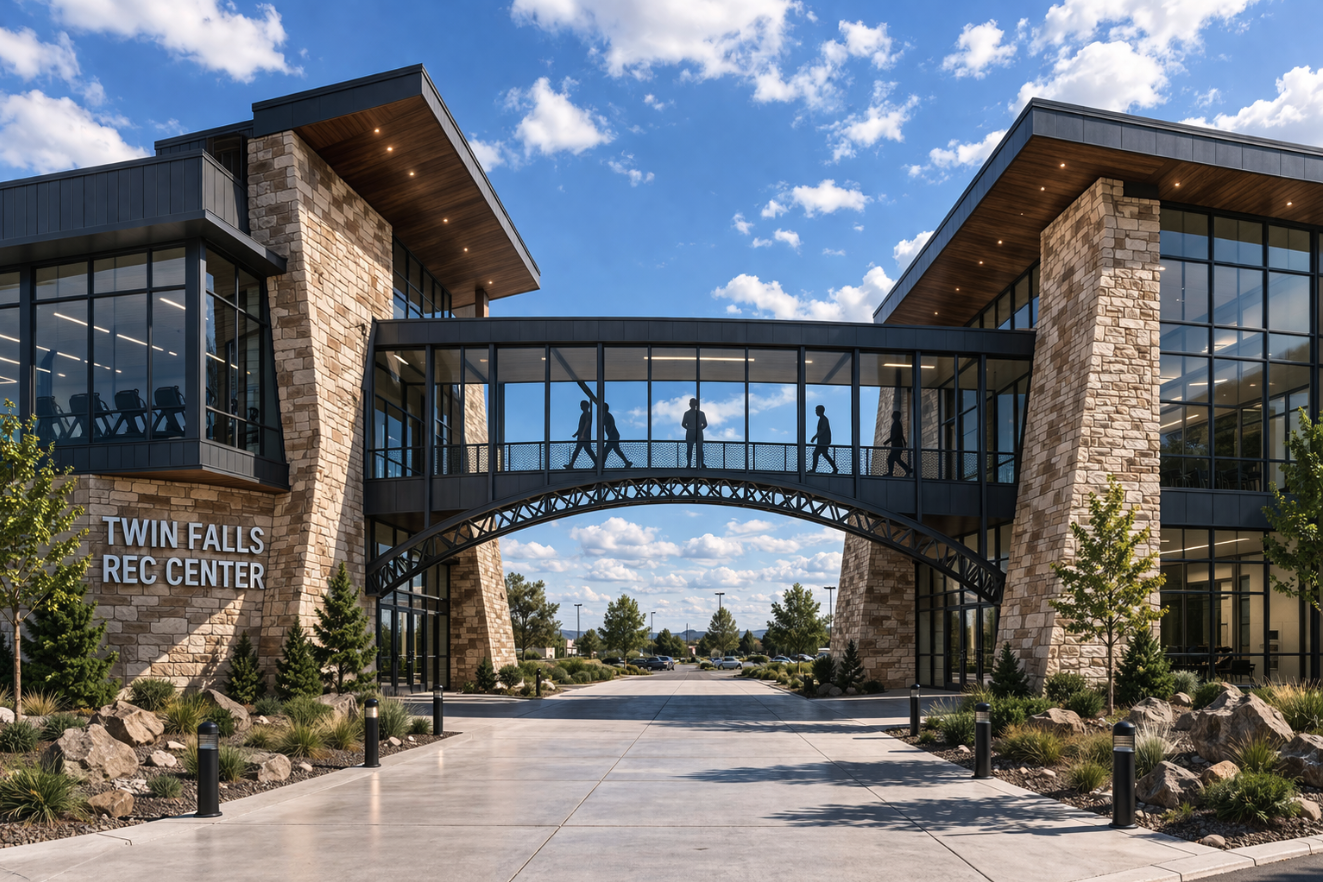
Twin Falls, Idaho · A Community Project
Our turn.
Every city around us has one. Nampa built one at half our size — without raising property taxes. Twin Falls, the Magic Valley's hub, is the only city its size in Idaho still waiting.
No bond vote. No tax increase. Nampa proved the path in our own state.
The numbers tell the story.
Twin Falls isn't a small town anymore — and the Magic Valley it anchors is bigger still. Recreation options haven't kept up.
Jerome and Shoshone have recreation centers. Twin Falls doesn't.2 Twin Falls — the regional hub — does not.
Sources: 1 Twin Falls city population: 55,589 (U.S. Census Bureau Population Estimates Program, July 2024); ~57,000 is a 2026 projection. Magic Valley regional population (8-county region) is an estimate based on 2024 county-level Census data. 2 City of Twin Falls Parks & Recreation — no public recreation center facility exists. Jerome Recreation District operates a facility in Jerome; Lincoln County Recreation District operates recreation facilities including a gym and county pool in Shoshone. 3 The Twin Falls Aquatics Director confirmed the city pool serves 60,000 users annually (cited during $2.3M pool renovation, 2025). 4The Twin Falls Parks and Recreation Director has managed the rec center ad hoc committee since 2017; as of mid-2025, the initiative remained at the “find a property” stage.
Spread the word
Every share gets us closer to city council. Send this to a neighbor, post it online, or text it to a friend.
Jerome · Kimberly · Buhl · Filer · Shoshone · Hansen · Hazelton · Murtaugh · Rogerson · Heyburn
Live outside Twin Falls? Sign anyway — here's why.
This isn't just a Twin Falls project. It's a Magic Valley facility in Twin Falls's backyard — and your signature is one of the strongest arguments we can put in front of city council.
You already pay into Twin Falls.
Every dollar you spend on groceries, gas, restaurants, or retail inside city limits carries Twin Falls sales tax. You've been funding city infrastructure for years without a voice in what gets built. A rec center is finally something you'd actually use.
It keeps your money in the region.
Right now, Magic Valley families drive to Boise, Pocatello, and Salt Lake City for tournaments, swim meets, climbing walls, and indoor recreation. That money leaves the valley. A Twin Falls rec center keeps it here — in our economy, for our kids.
Your signature proves regional demand.
When signatures come in from every Magic Valley ZIP code, the council can't dismiss this as “just Twin Falls wanting something.” Out-of-town names are political proof that the facility will serve a region of 210,000 — not just one city of 57,000.
We Did the Homework
A community-authored feasibility study — built from scratch.
This isn't a wishlist — it's a cited, data-driven analysis covering market demand, financial projections, funding models, comparable facilities, and sports tourism potential. Written by community volunteers, not a consulting firm. It exists to inform the conversation and help the city justify commissioning a formal study of its own.
Read the Full Study →$45–60M
Estimated cost
City ad-hoc estimate ~$60M; campaign team estimate $35–50M. Low end scaled from comparables.
$1.8–2.8M
Projected annual revenue range
Conservative to upper-end scenarios — see feasibility study methodology.
~89%
Of earned revenue is memberships + day passes
At scale (Provo), daily resident use — not tournaments — is the revenue engine. Tournament hosting fees are conservative upside.
8 sections
Of in-depth research
Projections are based on our feasibility study methodology. Actual figures will depend on facility size, programming, and funding structure.
Who's Behind This
Meet the Rec'n Crew Lead
Sinuhe Montoya
Rec'n Crew Lead
I'm a husband, a father of two, a U.S. Army veteran, and a Twin Falls resident who believes this city deserves better than what it has right now when it comes to public recreation. That's why I built this website and started organizing.
I deployed to Iraq with Charlie Company, 54th Engineer Battalion. I was 20 years old. We lost soldiers — good people who never came home. I came home, and I don't take that lightly. Every day since has felt like borrowed time, and I've spent it trying to make that time count.
One of those soldiers was Specialist Troy Carlin Linden. Troy switched shifts with me on July 8, 2006, in Ramadi. An IED detonated near his vehicle. He didn't make it. I did. I named my son Troy Linden Montoyain his honor — and now I'm proposing we name this recreation center after him too.
After the Army, I built a career in business and technology — the practical work of helping organizations grow through good data and well-built systems. I'm not a marketing guy — I'm a systems builder. I mention it only because those are the same skills I'm putting into this campaign: research, infrastructure, and organized execution.
But this isn't about my career. It's about my community.
I've lived in Twin Falls long enough to know what makes it special — the people, the landscape, the pace of life. My kids are growing up here. My family is rooted here. And the more I've invested in this place, the more I feel a responsibility to give back to it.
When I realized that a city of 57,000 people — the regional hub of the Magic Valley — has zero public recreation centers while Jerome and Shoshone both have them, it stopped making sense. The city has been working on the idea since 2017, and I have a lot of respect for that effort. What a project like this needs to finally cross the finish line is organized community demand — so I decided to help build it.
I'm not a politician. I'm not a city employee. I'm not running for anything. I'm a community member who saw a gap, did the research, built the feasibility study, and created this platform so that every Twin Falls resident can have a voice before the decision gets made without them.
My purpose — the thing I came back from Iraq to do — is to serve. This is how I'm doing it.
More about this effort →The Vision
Imagine what Twin Falls could have.
Based on comparable communities our size, a right-sized recreation center for Twin Falls would include:
- ✓4 convertible basketball / volleyball / pickleball courts
- ✓Family & leisure aquatics
- ✓Fitness center & exercise studios
- ✓1/6-mile indoor track
- ✓Senior wellness area
- ✓Youth programs & child watch
- ✓Climbing wall
- ✓Multipurpose rooms & event space
The blueprint
Nampa, Idaho — an Idaho city half our size that built one with no bond vote and no tax increase.
Source: Nampa COP closing records, FY25 City of Nampa operating figures, 1990 U.S. Census. Court-validated Certificates of Participation (no bond election); debt retired 2003.
Operating proof
Jerome, Idaho — the gym pays for the pool.
The scale picture
Provo, UT — and the bond path we're skipping.
Utah passes bonds on a simple majority; Idaho requires 66.67%. Reserve the bond path for renewal, not construction.
“Aren't we too small?”
When Nampa committed to its recreation center, the city had about 28,000–33,000 residents — roughly half Twin Falls' size today. Canyon County then (~90,000) was about the size of Twin Falls County now (~97,500). If Nampa wasn't too small at half our size, neither are we — and we're the only city our size in Idaho still without one.
“Isn't Boot-Check already building courts?”
Boot-Check Sports Ranch is a wonderful addition — but it's a private, youth-only facility seven miles out of town. Our city basketball league has no home; it scrounges court time at school gyms across the district. A public rec center gives 57,000 residents of every agereliable, affordable, scheduled courts. That's not duplicating Boot-Check; it's the public facility a private one was never meant to be.
What moves a civic project forward is organized community demand.
The rec center idea has been worked on since 2017, and we're grateful to everyone who has carried it this far. Big public projects gain momentum when the community shows up behind them — that's exactly what this movement is here to build, alongside the city, not against it.
A Question Worth Asking
What should we name it?
Most civic facilities get named by committee, years after the fight is won. We think the community should have a say — now, while we're building momentum.
A personal proposal — Sinuhe Montoya, Rec'n Crew Lead
Troy wasn't from here. He was from Detroit Lakes, Minnesota — a small town most people couldn't find on a map. But he took my place on a mission that cost him his life and spared mine.
I propose we name this facility after U.S. Army Specialist Troy Carlin Linden — killed in action July 8, 2006, in Ramadi, Iraq. Bronze Star. Purple Heart. The 20th anniversary of his death is July 8, 2026— a day I'll be spending with Troy's family in Minnesota. The council conversation will come when the community mandate is ready, not because a date demands it.
But this isn't my center. It's yours. Tell us what you think when you sign below.
Read Troy's full story →Council Endorsement
Public officials backing the effort.
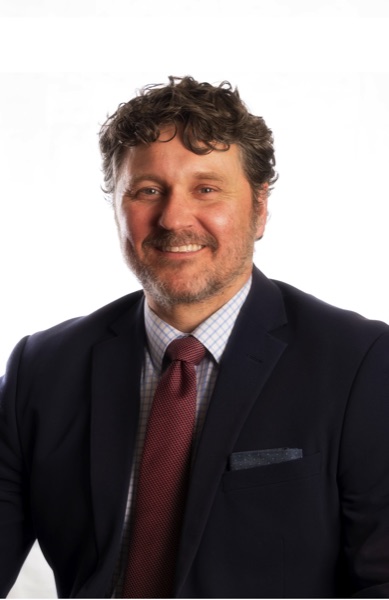
As a Twin Falls resident, I'd love to see our community come together to find a thoughtful path toward building a recreation center. Spaces like this can strengthen neighborhoods, support families, and create opportunities for people of all ages to gather, stay active, and build community.
Nathan Murray
Twin Falls City Council
Community Backing
Local businesses and organizations behind this.
Petition signatures show public demand. These supporters show the business community agrees — a Twin Falls rec center is good for the region.


Take Action
Add your name.
Every signature is a data point the city can't ignore.
This is a community advocacy petition — not a ballot initiative. Signers must be of legal voting age (18+).
Live in Jerome, Kimberly, Buhl, Filer, Shoshone, or anywhere in the Magic Valley? Sign here — your voice counts. A rec center in Twin Falls serves the whole region, and out-of-town signatures are the strongest political proof that this is a Magic Valley facility, not just a city project.