Rec Center
No League. No Registration. Just Show Up and Play.
TL;DR:
Most recreation center visits are not tournament games, league nights, or scheduled classes. They are drop-ins. A dad shooting baskets alone after work. A couple walking the indoor track on a Sunday morning. A teenager using the weight room after school. A group of strangers forming a pickup game because enough people showed up at the same time. Open gym and drop-in recreation is the most common way people use a rec center, and it is the reason most memberships get renewed. Twin Falls currently has no public facility where any of this can happen.
The blogs in this series have covered tournaments, leagues, structured classes, after-school programming, senior wellness, and community events. All of that programming matters. All of it drives revenue and serves specific populations.
But none of it is the most common reason people walk into a recreation center on a given day.
The most common reason is simpler: the building is open, and someone wants to move.
No registration form. No league commitment. No team to join. No schedule to follow. Just a membership card, an open door, and whatever the person feels like doing when they get there.
This is drop-in recreation. It is the heartbeat of every community rec center in the country. And Twin Falls does not have it.
What drop-in actually means
Drop-in recreation is exactly what it sounds like. A member walks into the facility during open hours, checks in at the front desk, and uses whatever is available. There is no appointment. There is no reservation. There is no additional fee beyond the membership they already pay.
The options depend on the facility and the time of day, but at a recreation center with the features the proposed Twin Falls facility includes, a drop-in visit could mean:
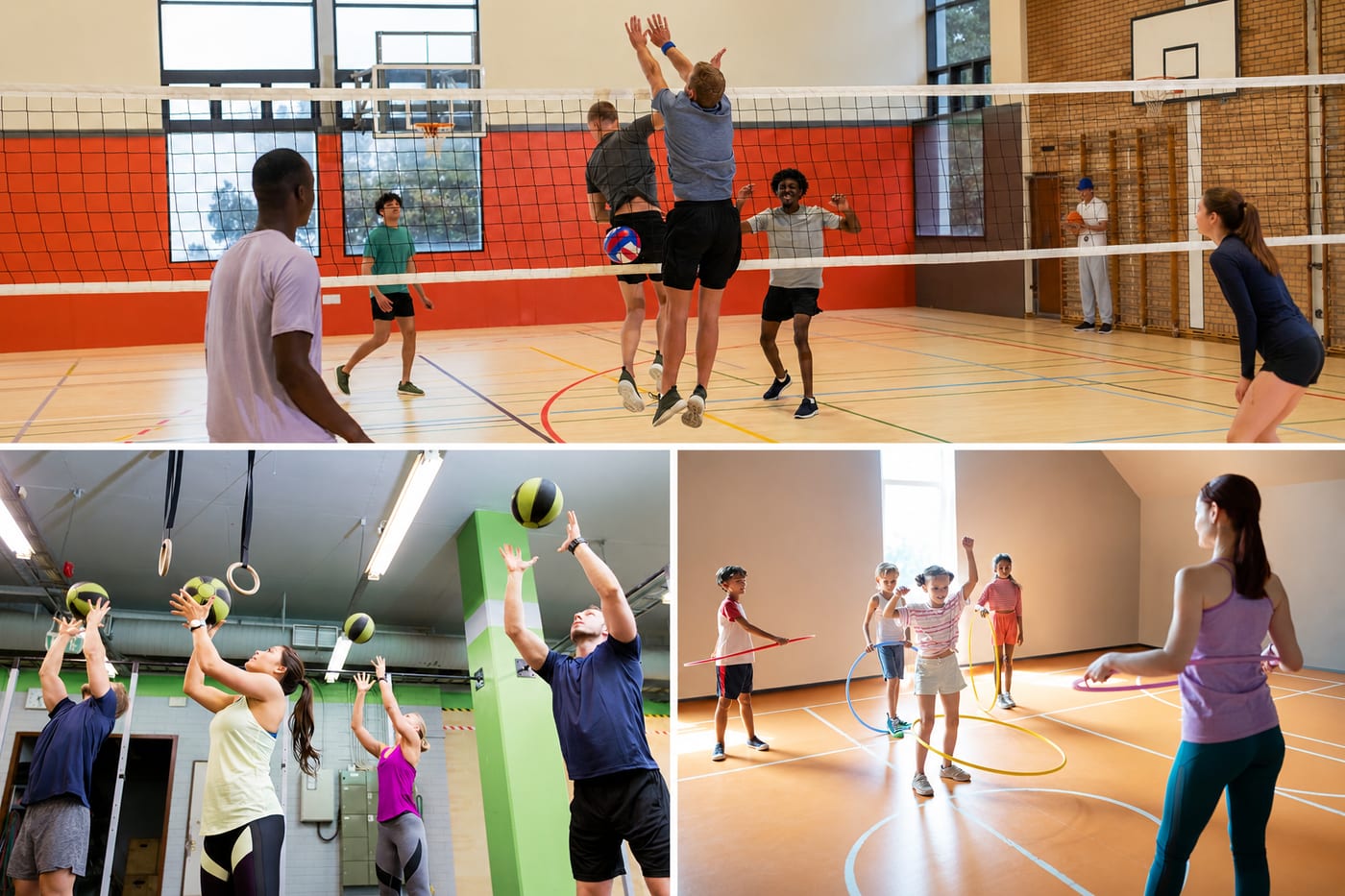
Shooting baskets alone on an open court during a weekday afternoon. Walking or jogging the indoor track for thirty minutes before picking the kids up from school. Using the weight room and cardio equipment at 6 a.m. before work. Playing pickleball on an open dedicated court with whoever else shows up that morning. Hitting a badminton shuttlecock back and forth with a friend in the multipurpose room. Sitting in the lobby reading a book while a spouse works out, just to get out of the house.
None of these activities require a program. None of them require a coach, an instructor, or an opponent arranged in advance. They require a building that is open and a person who wants to be there.
That simplicity is the point.
The people who use drop-in most
Organized programming serves specific groups on specific schedules. Drop-in serves everyone in between. And "everyone in between" turns out to be most people.
The after-work decompressor. A parent or professional who finishes the workday at 5:30 and wants thirty to forty-five minutes of physical activity before going home. They do not want to commit to a league that meets every Wednesday for twelve weeks. They want to shoot baskets, lift weights, or walk the track when the day allows it and skip it when it does not. Drop-in is designed for exactly this person.
The retired couple. Frank and Linda from the weekly schedule blog walk the indoor track three mornings a week. They do not sign up for a program. They do not register for a class. They show up when they feel like it, walk their twelve laps, and go home. Some weeks it is three visits. Some weeks it is five. The flexibility is what keeps them coming back.
The teenager with nothing to do. The after-school blog described this in detail. A student who walks to the rec center after school, shoots baskets for an hour, and does homework in the lobby until a parent picks them up. No program enrolled them. No coach invited them. The building was open and they came.
The solo exerciser. Not everyone wants a group fitness class. Not everyone wants a spotter or a training partner. Some people want a weight room, a pair of headphones, and forty-five minutes alone with a barbell. A recreation center fitness center serves this person the same way a private gym does, at a lower monthly cost and with a family membership that covers everyone in the household.
The pickup game player. This person does not belong to a league. They show up at open gym, look around for other people who showed up at the same time, and a game forms. Three-on-three basketball. Doubles pickleball. Half-court volleyball with whoever is available. Pickup games are not organized by the facility. They are organized by the people in the room, spontaneously, repeatedly, and for free.
The person who just needs to get out of the house. This is the use case that never appears in a facility's programming brochure but accounts for a meaningful share of daily visits. A stay-at-home parent with a toddler who needs a change of scenery. A retiree who lives alone and wants to be around people. A remote worker who has not left the house in three days. They come to the rec center not for a specific activity but for the environment: a warm, lit, populated public space where they can exist among other people without needing a reason.
The Surgeon General's advisory on loneliness identified the decline of informal gathering spaces as a driver of social isolation. Drop-in recreation is an informal gathering space with a fitness center attached.
Why drop-in drives membership retention
Recreation center administrators know something that most residents do not think about: the members who renew their memberships year after year are not the ones in organized leagues. They are the drop-in users.
League players are seasonal. They join for a twelve-week basketball season, play, and then evaluate whether to sign up again. Class attendees are cyclical. They commit for a session, finish, and decide whether the next session fits their schedule. Both groups have natural decision points where cancellation is easy.
Drop-in users do not have decision points. They have habits. The person who walks the track every Tuesday and Thursday morning does not think about whether to renew. Walking the track is just what they do on Tuesday and Thursday. The person who lifts weights three afternoons a week does not evaluate their membership quarterly. The weight room is part of their routine.
Habits are harder to cancel than subscriptions. A recreation center that generates a large base of habitual drop-in users is a recreation center with stable, predictable membership revenue. That is why Nampa's recreation center has maintained self-sufficiency for over thirty years. The memberships renew because the building is woven into daily routines that people do not want to give up.
What Twin Falls currently has instead
Twin Falls has private gyms. They serve individual fitness well, and several offer quality equipment and programming. What they do not offer is drop-in court access (basketball, volleyball, badminton, pickleball), an indoor walking track, open gymnasium time for pickup games, a youth activity space for after-school drop-ins, or a public facility where the membership covers the entire family rather than one adult.
A private gym membership in Twin Falls runs roughly $65 per month per person. For a household with two adults, that is $1,560 per year, and it covers only the two adults. Children are not included. Courts are not included. A track is not included.
A recreation center family membership at a comparable Idaho facility covers two adults and all dependent children for one flat monthly rate. Every drop-in activity described in this post, the track, the courts, the weight room, the open gym, the pickup games, is included. The value gap between a private gym membership for one person and a rec center membership for an entire family is the reason families switch and the reason they stay.
What open gym hours look like on a schedule
A well-run recreation center publishes a daily schedule that designates specific hours for open gym alongside league play, classes, and reserved events. A typical weekday might look like this:
6:00 a.m. to 8:00 a.m.: Fitness center and track open for early-morning drop-ins. Courts available for open play before programming starts.
8:00 a.m. to 12:00 p.m.: Senior programming and fitness classes in the multipurpose rooms. Fitness center open. Track open. Courts may be partially reserved for programming.
12:00 p.m. to 3:00 p.m.: Lightest hours. Full open gym. All courts available. Fitness center open. This is when the solo exerciser and the midday walker have the run of the building.
3:00 p.m. to 6:00 p.m.: After-school surge. Open gym on available courts. Youth activity space open. Track and fitness center available. Pickup games form naturally.
6:00 p.m. to 10:00 p.m.: League play occupies some courts. Remaining courts available for open play. Dodgeball or table tennis may run in the multipurpose room. Fitness center and track remain open for drop-ins.
The schedule ensures that organized programming and drop-in recreation coexist without crowding each other out. At no point during the day is the entire facility reserved for structured events. There is always somewhere for a drop-in member to go.
The thing that makes a rec center feel like yours
Tournaments make a city proud. Leagues build competitive communities. Classes develop skills. After-school access serves families. Multipurpose room events serve organizations.
Drop-in is what makes a rec center feel like it belongs to you personally.
It is the moment a Twin Falls resident walks through the front door at 7:00 a.m. on a random Wednesday, scans their card, nods at the front desk staff who recognizes them, and heads to the track without a plan beyond moving for thirty minutes. Nobody scheduled this visit. Nobody is expecting them. Nobody will notice if they come tomorrow instead. But they came today because the building is there, it is open, and it is theirs.
That feeling, the feeling that a public building exists for you to use whenever you want, is something Twin Falls residents have never experienced with recreation. They have experienced it with the library. They have experienced it with the city park. They have not experienced it with an indoor facility that has courts, a track, a weight room, and space to just be.
A recreation center changes that. Not with a program. Not with a tournament. With an open door.
Where the conversation stands
A recreation center committee within the Twin Falls Parks and Recreation Department has been studying this question since 2017. In June 2025, the City Council voted to advance the long-stalled feasibility study. Parks and Recreation Director Wendy Davis said the council's vote "breathed a little bit of life into what I thought was a dying initiative."
A grassroots advocacy campaign has proposed naming a potential facility after U.S. Army Specialist Troy Carlin Linden, a soldier with the 54th Engineer Battalion who was killed in action on July 8, 2006, in Ar Ramadi, Iraq. The proposal comes from a Twin Falls resident who served in the same unit.
Closing
The loudest case for a recreation center is the tournament that fills hotel rooms. The most visible case is the youth league that gives kids somewhere to play. The most researched case is the senior wellness programming that reduces falls and chronic disease.
The quietest case, and the one that sustains the building financially year after year, is the person who just showed up because the door was open.
Drop-in recreation is not a feature of a rec center. It is the foundation. It is what happens every hour of every day between the scheduled programming. It is the reason memberships renew without being asked. And it is the thing Twin Falls has never had: a public indoor space where you can walk in, move, and leave whenever you want, no commitment required.
The building does not need to convince you to come. It just needs to exist. The rest takes care of itself.
Frequently Asked Questions
What is drop-in recreation? Drop-in means using the facility without a reservation, registration, or scheduled program. Members scan their card at the front desk and use whatever is available: open gym courts, the fitness center, the indoor track, or the multipurpose rooms. No additional fee beyond the membership.
Is open gym available every day? At comparable recreation centers, open gym hours are available every day the facility is open. Specific court availability varies based on league play and event schedules, but the fitness center, track, and at least some court space are always accessible for drop-in use.
Can I just walk the track without doing anything else? Yes. Many rec center members use only the indoor track. Walking the track is one of the most common daily activities at every recreation center with one, particularly among seniors and people recovering from injuries.
Do pickup games happen at rec centers? Regularly. When enough drop-in players show up during open gym hours, games form spontaneously. Three-on-three basketball, doubles pickleball, half-court volleyball. No sign-up required. The facility provides the space and equipment. Players organize themselves.
How does drop-in compare to a private gym membership? A private gym membership covers one adult for roughly $65 per month. A rec center family membership covers two adults and all children for one flat rate, and includes courts, a track, open gym, and drop-in access to the full facility. The per-person value is significantly higher.
Is Twin Falls actively considering a recreation center? A city committee has been studying the question since 2017. In June 2025, the City Council voted to advance the feasibility process. No specific site, cost, or funding mechanism has been finalized as of this writing.
Where can residents follow the conversation? Twin Falls City Council meetings are open to the public, and the Parks and Recreation Department posts updates on the city's official website. A community advocacy group is also tracking the issue at twinfallsreccenter.com.