Sports Event
What a Weekend Basketball Tournament Actually Does for a City Like Twin Falls

TL;DR:
Youth and amateur sports generated $52.2 billion in travel-related spending nationally in 2023, more than spectator sports. A single basketball tournament weekend can fill thousands of hotel rooms, put hundreds of thousands of dollars into local restaurants and retailers, and bring college coaches and competing families into a city that most of them have never visited. Twin Falls has no facility capable of hosting a multi-court tournament. Every weekend that a tournament happens in Boise, Idaho Falls, or Salt Lake City instead of Twin Falls, that spending leaves the Magic Valley entirely.
Somewhere this weekend, a gym full of twelve-year-olds is playing tournament basketball in a city that is not their own. Their parents booked hotel rooms on Friday. They ate at local restaurants Saturday morning. They bought gas, stopped at a coffee shop between games, picked up snacks at a grocery store, and filled a few hours between brackets at whatever the host city had to offer.
By Sunday afternoon, they drove home. The money they spent stayed behind.
That scene plays out across the country every weekend of the year, and it adds up to one of the largest segments of the American travel economy. For cities that have the facilities to host, tournament weekends are a reliable, recurring source of economic activity. For cities that do not, those weekends represent spending that leaves town and never comes back.
Twin Falls is in the second category.
The size of what is happening nationally
Youth and amateur sports tourism is not a niche sector. According to the Sports Events and Tourism Association, youth and amateur sports generated $52.2 billion in travel-related spending in 2023. That figure includes 204.9 million travelers and 73.5 million hotel room nights. It is larger than spectator sports tourism, which generated $47.1 billion in the same period.
A Towson University analysis of the broader economic effects found that in 2021, $39.7 billion in direct youth sports spending generated a total economic impact of $91.8 billion when indirect and induced effects were included. That activity supported 635,000 jobs and generated $12.9 billion in tax revenue for local economies.
The spending breakdown for visiting families is consistent across markets: roughly 21 percent goes to lodging, 19 percent to food and beverage, 13 percent to recreation, and 12 percent to retail, according to SETA data. EventConnect's analysis of more than 4,000 events across 800 cities found that visiting families spend an average of $115 per day on food, transportation, and entertainment beyond their hotel costs.
These are not abstract economic projections. They are documented spending patterns from real tournaments in real cities. And basketball is one of the sports that drives them most consistently, because basketball tournaments are compact (one building, one weekend), travel well (teams move easily), and operate year-round indoors.
What a basketball tournament weekend actually looks like
The research is useful, but numbers alone do not capture what a tournament weekend does to a city. The experience is more tangible than that.
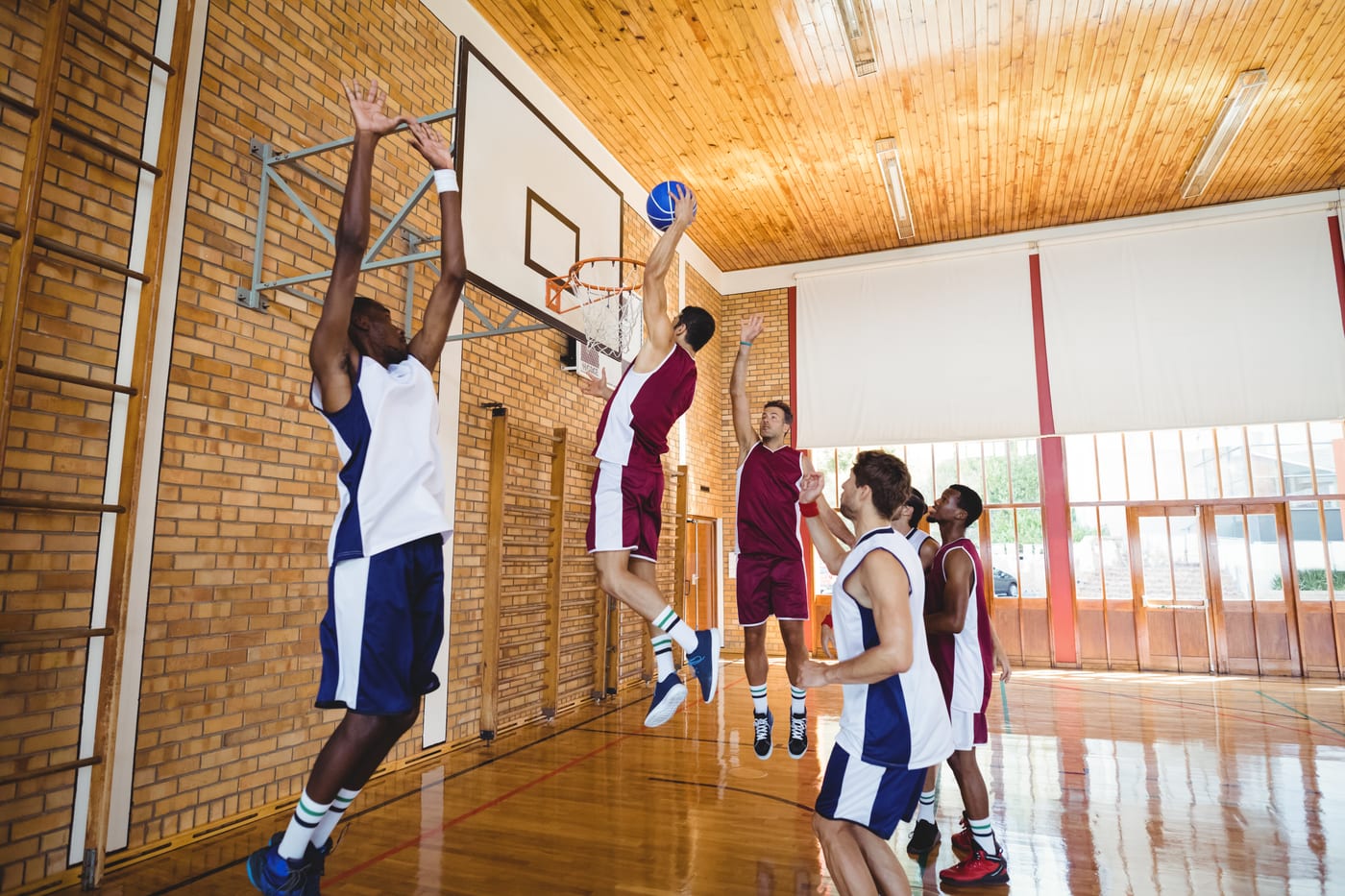
A typical 32-team youth basketball tournament brings roughly 400 to 600 athletes and their families into a host city for two days. Those families need hotel rooms for Friday and Saturday nights. They need breakfast, lunch, and dinner at local restaurants. They need gas stations, coffee shops, and something to do between games. Kids who finish early explore the host city with their parents. Families who have never been to the area discover what it has to offer.
The documented impact of individual basketball tournaments makes the pattern concrete. In Rochester, Minnesota, a youth basketball tournament in November 2025 was projected to generate $800,000 in economic impact and fill 3,000 hotel rooms in a single weekend. Local hotels described the tournament as arriving during their "slow season," when rooms would otherwise sit empty.
The 2024 Pennsylvania Middle School Basketball Championship in State College, Pennsylvania, drew 329 teams, generated $4.16 million in economic impact, and accounted for 5,065 hotel room nights. The event has been held annually since 2019 and has grown each year.
In Bryan, Texas, the NXTPRO basketball tournament brought more than 400 teams and 432 college coaches to the city's Legends Event Center, filling all eight courts plus 20 additional courts across the community and generating more than $5 million in economic impact.
These are not mega-events in destination cities. They are mid-sized tournaments in mid-sized communities, the exact category Twin Falls would compete in if it had the facility to host.
What happens beyond the economic numbers
The dollar figures matter, but they are not the whole story. Tournament hosting does something for a community that spending data does not fully capture.
When a city hosts a basketball tournament, local kids play on their home court. That sounds simple, but for youth athletes who have spent years traveling to Boise, Idaho Falls, or Salt Lake City for every competitive event, playing in front of their own town is a different experience. Parents who normally spend weekends in hotel rooms in other cities instead volunteer as scorekeepers and concession workers at the local facility. Neighbors who would never otherwise cross paths end up sharing bleacher space for an afternoon.
Visiting teams and families experience Twin Falls for the first time. Some of them come back. A percentage of tournament visitors in every market study become repeat tourists, and a smaller percentage become residents or business relocators. The broader economic case for recreation infrastructure, including its effects on property values and regional competitiveness, has been documented separately. Tournament hosting is the most visible, most recurring expression of that dynamic.
For youth athletes specifically, playing in organized tournaments at home rather than always traveling away has developmental value. It normalizes competitive play. It creates a pathway where a middle schooler can watch a high school tournament in the same gym and see what the next level looks like. It connects kids to their community through sport rather than requiring them to leave their community to access it, a gap that has been documented in Twin Falls for years.
Why Twin Falls cannot host right now
Twin Falls has no facility with the multi-court capacity needed to host a sanctioned basketball tournament. A competitive youth tournament typically requires a minimum of four to six full-size courts operating simultaneously, with spectator seating, warm-up space, scorer's tables, and concessions. The facility needs to accommodate 300 to 600 participants plus family members for two consecutive days.
School gymnasiums, which Twin Falls youth sports programs already rely on through borrowed and inconsistent access, have one or two courts and are not available on the schedule a tournament requires. Private gyms are not configured for tournament play. There is no public multi-court facility in the city.
The result is straightforward: every basketball tournament that Twin Falls families participate in happens somewhere else. The hotel rooms, the restaurant meals, the gas station fill-ups, and the retail spending all flow to the host city. Twin Falls exports its tournament dollars and imports none.
EventConnect's data found that the cancellation of a single youth sports tournament costs a host city an average of $360,000 in lost hotel revenue alone. For Twin Falls, the loss is not from cancellation. It is from never hosting in the first place. The revenue was never captured because the facility was never built.
What a tournament-capable facility would need
A recreation center designed to host basketball tournaments does not require an arena. It requires a multi-court gymnasium, typically four to eight full-size courts, with the following features: retractable bleacher seating for spectators, a tournament-ready scoring and timing system, adequate locker rooms and restroom facilities for visiting teams, a warm-up and staging area, concession space, sufficient parking, and proximity to hotels and restaurants.
This configuration is standard in recreation centers built in comparable cities over the past decade. It is also what makes a facility viable beyond tournament weekends. Multi-court gymnasium space serves daily community needs (youth leagues, adult recreational play, senior fitness, open gym time) and converts to tournament configuration on event weekends. The tournament function does not require a separate building. It requires a building designed with enough courts and enough flexibility to serve both purposes.
Twin Falls' position as the regional hub of the Magic Valley, with hotel infrastructure along Blue Lakes Boulevard, interstate access, and a metro area of more than 122,000, gives it a geographic advantage that smaller host cities do not have. The missing piece is the facility itself.
What this means for the rec center conversation
The recreation center conversation in Twin Falls has understandably focused on daily community needs: family recreation costs, senior wellness, and the five-month winter gap in recreation capacity. Those are the right starting points.
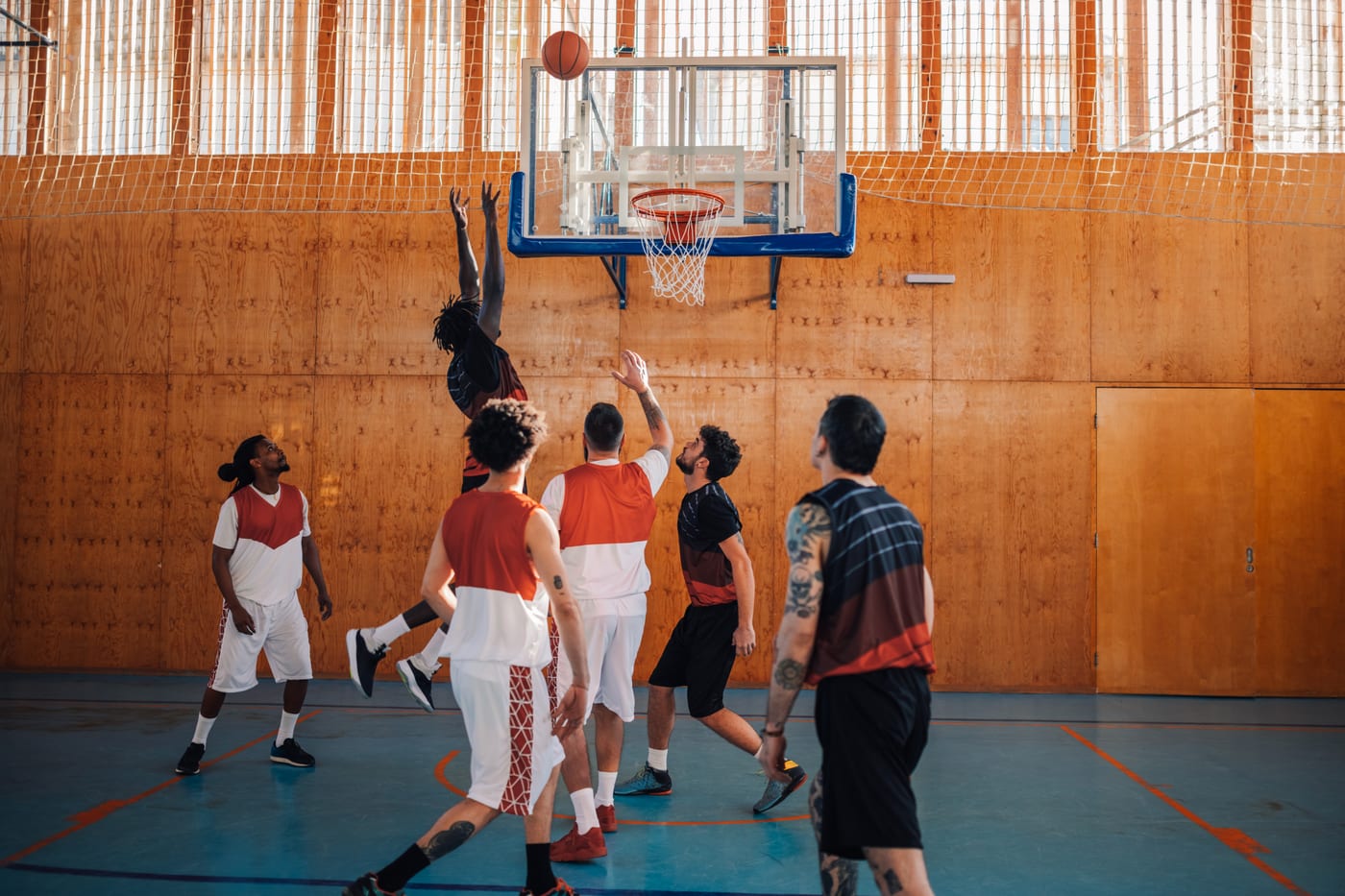
But the tournament hosting dimension adds something that daily programming alone does not: recurring outside revenue. A facility that hosts 10 to 15 tournament weekends per year is not just serving Twin Falls residents. It is drawing visitors, filling hotel rooms, feeding local restaurants, and generating economic activity that would not otherwise exist in the Magic Valley.
Youth sports tourism is a $52.2 billion national industry. Twin Falls is currently capturing none of it. A tournament-capable recreation center would change that, not hypothetically, but in the same documented pattern that cities across the country have already demonstrated.
Where the conversation stands
A recreation center committee within the Twin Falls Parks and Recreation Department has been studying this question since 2017. In June 2025, the City Council voted to advance the long-stalled feasibility study. Parks and Recreation Director Wendy Davis said the council's vote "breathed a little bit of life into what I thought was a dying initiative."
A grassroots advocacy campaign has proposed naming a potential facility after U.S. Army Specialist Troy Carlin Linden, a soldier with the 54th Engineer Battalion who was killed in action on July 8, 2006, in Ar Ramadi, Iraq. The proposal comes from a Twin Falls resident who served in the same unit.
Closing
A basketball tournament is a weekend event. Its economic impact is measured in hotel rooms and restaurant receipts. But its community impact is measured in something harder to quantify: a city that hosts rather than exports, kids who play at home rather than always on the road, and a community that comes together around something it built for itself.
Twin Falls families already participate in tournament basketball. They just do it in other people's cities. Whether that changes is a facility question, and it is one the city is actively studying.
Frequently Asked Questions
How big is the youth sports tourism industry? The Sports Events and Tourism Association reports that youth and amateur sports generated $52.2 billion in travel-related spending in 2023, with 204.9 million travelers and 73.5 million hotel room nights. It is a larger economic sector than spectator sports tourism.
How much does a single basketball tournament generate for a host city? It varies by size, but documented examples are consistent. A youth basketball tournament in Rochester, Minnesota, generated $800,000 and filled 3,000 hotel rooms in one weekend. The Pennsylvania Middle School Basketball Championship generated $4.16 million across 329 teams. EventConnect data shows the average tournament generates $360,000 in hotel revenue alone.
Why can't Twin Falls host tournaments now? The city has no multi-court indoor facility. A competitive basketball tournament requires a minimum of four to six full-size courts operating simultaneously, with spectator seating, warm-up space, and concessions. School gyms have one or two courts and are not available on tournament schedules. There is no public alternative.
Would tournament hosting actually work in a city Twin Falls' size? Yes. The documented examples (Rochester, State College, Bryan) are all mid-sized communities, not major metros. Twin Falls' position as the Magic Valley's regional hub, with hotel infrastructure and interstate access, gives it hosting advantages that many smaller tournament cities lack.
Would a tournament-capable facility only be useful on tournament weekends? No. Multi-court gymnasium space serves daily community needs throughout the week: youth leagues, adult recreational play, open gym, fitness programming, and senior activities. Tournament configuration is a weekend function layered on top of daily programming, not a separate purpose.
Is Twin Falls actively considering a recreation center? A city committee has been studying the question since 2017. In June 2025, the City Council voted to advance the feasibility process. No specific site, cost, or funding mechanism has been finalized as of this writing.
Where can residents follow the conversation? Twin Falls City Council meetings are open to the public, and the Parks and Recreation Department posts updates on the city's official website. A community advocacy group is also tracking the issue at twinfallsreccenter.com.