Rec Center
How Magic Valley Seniors Can Stay Active Indoors This Year
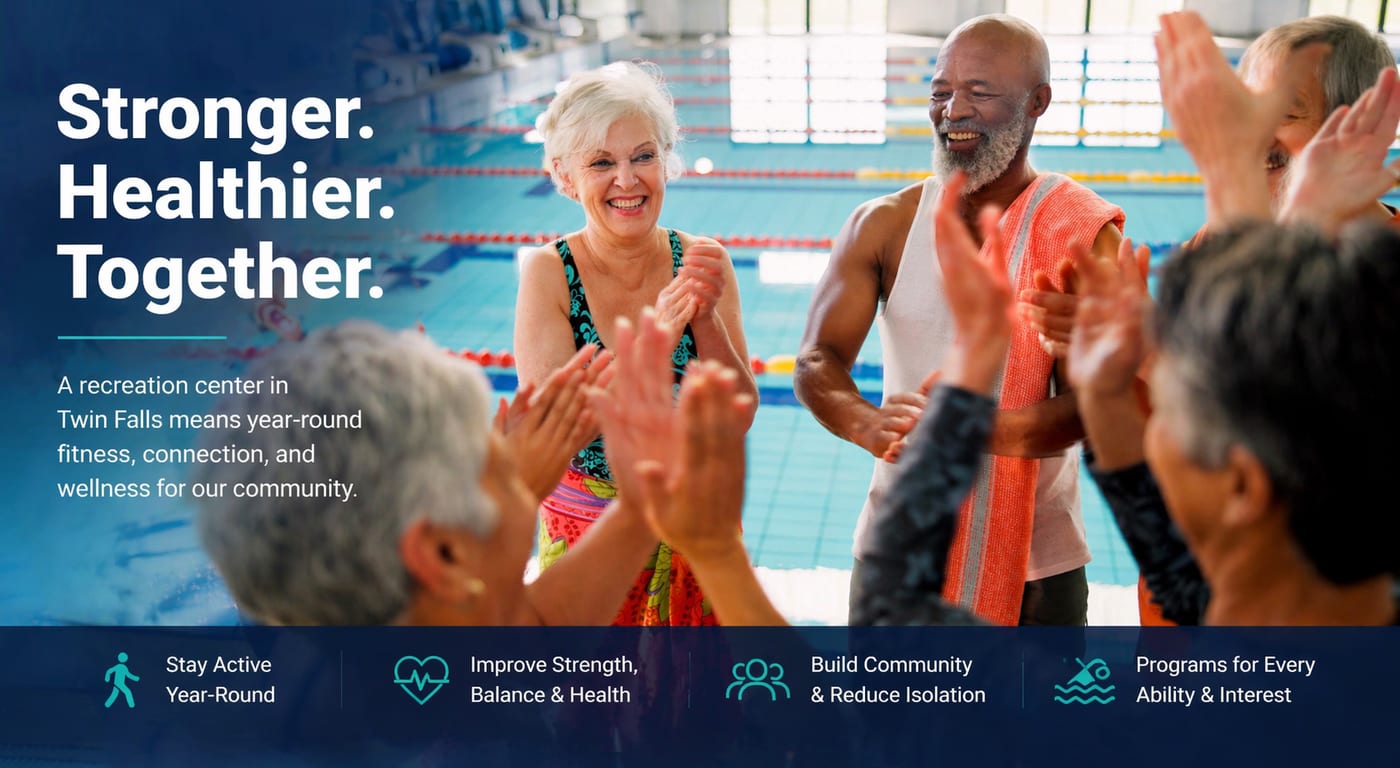
If you're a senior in Twin Falls or the surrounding Magic Valley region, staying active through Idaho's cold winters or smoky late summers is a real challenge. You need indoor options that are safe, affordable, and actually worth showing up to. That's the gap a dedicated recreation center is built to close, and it's exactly what the Twin Falls Recreation Center movement is working to fill.
This post lays out what the research says about indoor fitness for older adults, what's currently missing in our community, and what a proper recreation center could realistically provide. No fluff, just numbers and a clear picture of what's at stake.
Why Indoor Activity Matters More After 65
Let's start with the baseline. According to the CDC's guidelines for older adults, adults 65 and older need at least 150 minutes of moderate-intensity aerobic activity per week, plus muscle-strengthening activities on two or more days weekly. That's a meaningful commitment, and weather, mobility, and safety concerns can make outdoor activity unreliable for a large portion of the year.
Twin Falls sits at roughly 3,700 feet in elevation. Winters bring ice, wind, and temperatures that make a morning walk genuinely risky for someone managing arthritis or balance issues. Smoke season in late summer adds another barrier. An indoor facility removes those variables entirely.
The stakes are not small. Falls are the leading cause of injury-related death among adults over 65 in the United States. Consistent physical activity, especially balance and strength training, is one of the most effective tools for prevention. The question isn't whether seniors need access to structured indoor fitness. The question is whether Twin Falls is going to provide it.
What the Research Actually Shows About Senior Fitness Programs
The evidence for structured, facility-based programs is strong and specific. A rapid review published in the International Journal of Behavioral Nutrition and Physical Activity found that multicomponent exercise programs showed 95% positive effects on physical activity levels, 90% positive effects on falls prevention, and 81% positive effects on physical functioning among older adults. Those numbers hold up across study types and population sizes.
It's worth being honest about what the research also shows at the other end of the spectrum. A systematic review of home-based indoor exercise programs found improvements in psychosocial outcomes and walking speed, which is genuinely good news. But home-based programs consistently underperform facility-based programs on adherence. People quit when they're alone. They show up when there's a class, a coach, and a community waiting for them.
This distinction matters for Twin Falls specifically. A recreation center isn't just about square footage. It's about creating the social infrastructure that keeps older adults engaged week after week, not just for the first two months of a New Year's resolution.
The Cost Barrier and How Recreation Centers Address It
One of the most common concerns from seniors considering fitness programs is cost. Gym memberships in Twin Falls range from roughly $30 to $60 per month for basic access, and that number climbs quickly if you want access to pools, group classes, or specialized programming. For someone on a fixed income, that math often doesn't work.
Here's something many Magic Valley residents don't know: programs like SilverSneakers and Silver&Fit provide older adults access to local recreation centers at little to no cost through Medicare Advantage plans. The National Recreation and Park Association documented this in detail, and it's become a standard partnership model for community recreation centers across the country.
A properly structured Twin Falls Recreation Center could pursue these partnerships from day one. That means a senior who's already paying Medicare premiums could potentially access fitness classes, a pool, walking tracks, and strength training equipment at zero additional out-of-pocket cost. The infrastructure has to exist first, though. Right now, it doesn't.
What a Twin Falls Recreation Center Would Actually Offer Seniors
When community members and planners discuss what a Twin Falls Recreation Center should include, senior programming consistently appears near the top of the priority list. Here's what a well-designed facility would realistically provide:
- Indoor walking track: A climate-controlled, flat surface that's safe year-round, no ice, no smoke, no traffic.
- Aquatics: Warm-water pool programming is one of the most effective options for seniors with joint pain or limited mobility. Cities like Nampa (population roughly 110,000) and Idaho Falls (population roughly 65,000) both have municipal aquatic centers. Twin Falls, at around 53,000 residents, is overdue.
- Group fitness classes: Chair yoga, balance training, low-impact aerobics, and strength classes specifically designed for older adults.
- Social spaces: Gathering areas, coffee after class, and programming that reduces isolation. The County Health Rankings research is clear that social and physical programming together reduce loneliness and improve mental health outcomes in meaningful, measurable ways.
- Certified instructors: Programs like EnhanceFitness, which reported that 94% of participants rated themselves a 3 or higher on a 1 to 5 scale for improvement in physical abilities, depend on trained staff delivering consistent, evidence-based programming.
None of this is experimental. These are proven program types running successfully in recreation centers across Idaho and the broader Mountain West. The model works. Twin Falls just needs the facility to run it.
Where Twin Falls Stands Right Now
To be straightforward: Twin Falls currently lacks a dedicated community recreation center. The College of Southern Idaho offers some fitness access, and there are private gyms in the area, but there is no publicly accessible, non-profit recreation center designed to serve all residents across all income levels and age groups.
Jerome, with roughly 13,000 residents, has more structured community recreation programming per capita than Twin Falls. That gap reflects a planning and investment decision, not a lack of need. The Twin Falls Recreation Center initiative is working to change that by building community support, documenting local need, and making the case to decision-makers with real data.
If you're a senior in Magic Valley, or if you have a parent or grandparent here, this isn't an abstract policy conversation. It's about whether someone you care about has a safe, affordable, welcoming place to stay strong this winter.
Frequently Asked Questions About Senior Fitness and Recreation Centers
Q: What types of indoor exercise are best for seniors?
Multicomponent programs that combine aerobic activity, strength training, and balance work show the strongest outcomes in the research. Water aerobics, chair yoga, resistance training with light weights or bands, and walking tracks are all well-supported options for adults 65 and older.
Q: How much does it typically cost to use a community recreation center?
Costs vary, but non-profit community recreation centers generally offer memberships at lower rates than private gyms, often in the range of $20 to $40 per month. Many also offer sliding-scale fees for lower-income residents. Seniors with Medicare Advantage plans may qualify for free or reduced access through programs like SilverSneakers or Silver&Fit.
Q: Is home exercise enough for older adults?
Home-based programs do provide real benefits, particularly for mental health and basic mobility. However, research consistently shows that facility-based programs produce stronger adherence and better physical outcomes over time. The social component of a recreation center is a significant factor in keeping older adults engaged long-term.
Q: How can I support the Twin Falls Recreation Center effort?
The best first step is to get connected. Visit the Twin Falls Recreation Center website, sign up for updates, and share the conversation with neighbors and family members who would benefit. Community engagement directly influences how decision-makers prioritize infrastructure investments.
Q: When could a Twin Falls Recreation Center open?
That timeline depends on how quickly community support and planning momentum builds. Comparable projects in similar-sized Idaho cities have moved from concept to groundbreaking in three to six years when community engagement was strong. The earlier residents get involved, the shorter that timeline tends to be.
If staying active indoors matters to you or someone in your family, now is the time to add your voice to the conversation. Connect with the Twin Falls Recreation Center initiative today, share this post with a neighbor, and let your city leaders know that quality indoor recreation for seniors is a priority in Magic Valley.