Rec Center
What Twin Falls Seniors Are Missing, and What the Research Says They Need
TL;DR:
Twin Falls has roughly 9,000 residents over 65, and that number is growing. The city has no dedicated indoor facility offering structured, evidence-based wellness programming for older adults. Peer Idaho cities of comparable or smaller size, including Pocatello and Idaho Falls, have operated public recreation centers with senior programming for years. Federal research consistently shows that structured physical activity reduces fall risk, chronic disease burden, and healthcare costs among older adults. The gap in Twin Falls is not a future concern. It is a present one.
If you are a senior in Twin Falls, or if you have a parent or grandparent living there, you have probably felt the gap. There are good intentions scattered across the community, but no single, dedicated place where older adults can show up consistently, get moving safely, and stay connected to people who notice whether they come back tomorrow.
That gap has real consequences. And in 2026, there is enough published evidence to understand exactly what it costs and what it would take to close it.
The scale of the challenge
Start with the demographics. According to Healthy People 2030, the federal government's framework for national health objectives, almost a quarter of the U.S. population will be age 65 or older by 2060. That shift is already underway in Idaho, where the Department of Health and Welfare has documented steadily rising rates of chronic conditions tied to inactivity and aging.
Twin Falls has roughly 57,325 residents, with an estimated 8,967 over the age of 65 based on current demographic data. Twin Falls County's population has reached approximately 96,500, and the broader metro area exceeds 122,000. As the regional hub of the Magic Valley, Twin Falls draws seniors from surrounding communities for medical care, shopping, and social activity. The recreation infrastructure should reflect that regional role.
The federal data on what happens when it does not is sobering. Healthy People 2030 documents that 1 in 4 older adults fall each year, and falls are a leading cause of injury in this age group. The CDC reports that 4 in 5 of the most costly chronic conditions among adults 50 and older can be prevented or managed with regular physical activity, and that non-institutionalized adults in that age group spend $860 billion annually on healthcare nationally.
These are not abstract projections. They show up in Twin Falls emergency rooms, in families scrambling to arrange care, and in seniors who quietly stop doing the things they used to do because they are afraid of falling or have no accessible place to exercise.
What evidence-based senior wellness actually looks like
The phrase "evidence-based" gets used frequently in healthcare discussions. In the context of senior wellness programming, it has a specific, documented meaning.
The Administration for Community Living, the federal agency overseeing aging services, notes that since 2003, the aging services network has been steadily moving toward wider implementation of disease prevention and health promotion programs that are based on scientific evidence and demonstrated to improve the health of older adults. As of 2012, Congressional appropriations require that Title III-D funding under the Older Americans Act be used only for evidence-based programs.
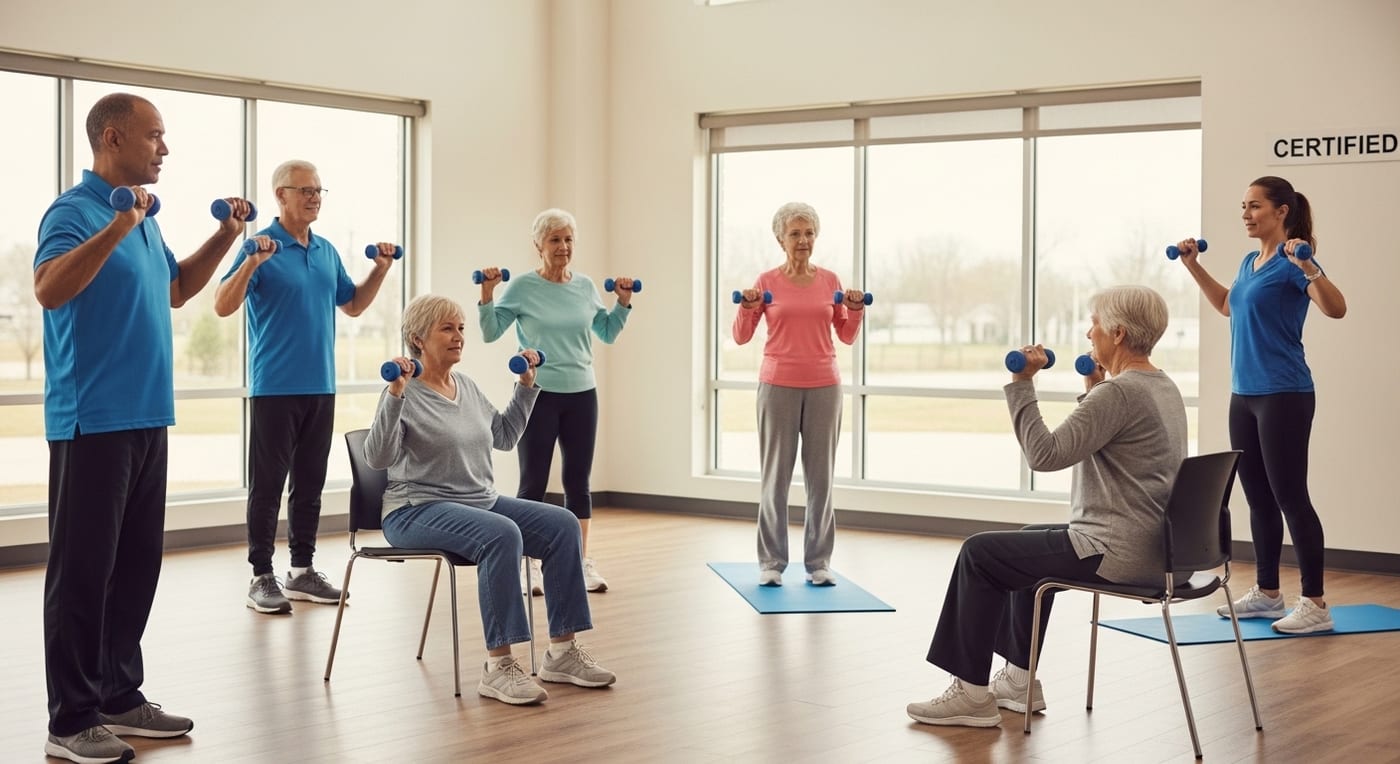
One of the strongest examples is EnhanceFitness, a group exercise program designed specifically for older adults. According to the Office of Disease Prevention and Health Promotion, more than 105,000 people have participated in EnhanceFitness across 44 states since the program launched as a pilot in 1993. Over 99 percent of participants say they would recommend it to a friend. The CDC recognizes EnhanceFitness as an Arthritis-Appropriate, Evidence-Based Intervention proven to reduce symptoms and help participants safely increase physical activity.
What makes programs like EnhanceFitness work is not the specific exercises. It is the structure. Effective senior wellness programming shares a consistent set of characteristics documented across the research: sessions meet multiple times per week in a dedicated, accessible space; participants develop social bonds and notice when someone is absent; certified instructors trained in senior physiology lead the sessions; programming addresses balance, strength, cardiovascular health, and mental wellness together; and pricing and access barriers are kept low enough that fixed-income seniors can participate.
Another example is the WISE program from the National Council on Aging, which empowers older adults to advocate for their own health, make healthy lifestyle choices, and navigate the use of medications and substances. WISE has been implemented across the country since 1996 and requires exactly the kind of stable, welcoming physical environment that a community recreation center is designed to provide.
A 2023 intervention study published in the International Journal of Environmental Research and Public Health found that an eight-week walking program for older adults produced significant positive correlations between walking activity and health-promoting lifestyle measures across all participants. The study also demonstrated that group-based walking, with social support and monitoring, produced substantially more consistent participation than independent outdoor walking. The social infrastructure matters as much as the physical activity itself.
What Twin Falls does not yet have
Twin Falls has some senior programming scattered across various organizations. The Senior Center on Shoshone Street serves an important function for meals, social connection, and basic programming. But it was not designed as a full wellness facility, and it was not built to meet the scale of what the community's aging population now needs.
There is no dedicated indoor aquatic facility for low-impact senior exercise in Twin Falls. There is no full gymnasium with senior fitness equipment, certified programming staff, and consistent class schedules built around older adults. There is no centralized place where a 72-year-old resident can walk in on a Tuesday morning and choose between a balance class, a lap swim, and a coffee with neighbors, then come back Thursday and do it again.
That kind of daily-access hub is not a luxury. It is what comparable Idaho cities already provide.
What peer Idaho cities already offer
Pocatello, with roughly 57,000 residents, operates a Community Recreation Center offering swimming, fitness classes, climbing, and group programming, along with the Portneuf Wellness Complex. The facility accepts SilverSneakers, Silver & Fit, and Renew Active memberships, making it accessible to seniors on Medicare Advantage plans at no additional cost.
Idaho Falls, at approximately 65,000 residents, operates two public recreation facilities: the IF Recreation Center (gym, courts, weight room, with a $4 senior daily rate) and the Wes Deist Aquatic Center (lap swimming, fitness classes, swim lessons).
Nampa, at roughly 110,000 residents, has operated a 140,000-square-foot recreation center since 1994 that includes a senior center wing. The facility has covered 100 percent of its operating costs from user fees for more than thirty years.
Jerome, at roughly 13,000 residents, operates a 32,000-square-foot recreation center with a pool, courts, indoor track, and group fitness programming.
Twin Falls, at 57,325 residents and serving as the regional hub for a metro area of more than 122,000, has none of these. The city pool, built in the 1980s, serves 60,000 users a year and is currently undergoing a $2 million-plus renovation. It addresses aquatics. It does not address the broader indoor wellness gap for seniors or any other population.
Why this matters beyond fitness
The case for senior recreation infrastructure is often framed around physical health. It is a strong frame. But the research points to something equally important: social connection.
The U.S. Surgeon General's 2023 advisory on loneliness and isolation documented that among older adults, chronic loneliness increases the risk of developing dementia by approximately 50 percent. Social isolation raises the risk of premature mortality by 29 percent. The advisory's first pillar for addressing the crisis is strengthening social infrastructure, specifically naming recreation facilities among the physical spaces that support connection.
A recreation center with consistent senior programming does not just get people moving. It creates a place where people are expected, where absence is noticed, and where the slow drift into isolation that so many older adults experience can be interrupted before it becomes a health crisis.
Where the conversation stands
A recreation center committee within the Twin Falls Parks and Recreation Department has been studying this question since 2017. In June 2025, the Twin Falls City Council voted to advance the long-stalled feasibility study. Parks and Recreation Director Wendy Davis said the council's vote "breathed a little bit of life into what I thought was a dying initiative."
A grassroots advocacy campaign has separately proposed naming a potential facility after U.S. Army Specialist Troy Carlin Linden, a soldier with the 54th Engineer Battalion who was killed in action on July 8, 2006, in Ar Ramadi, Iraq. The proposal comes from a Twin Falls resident who served in the same unit.
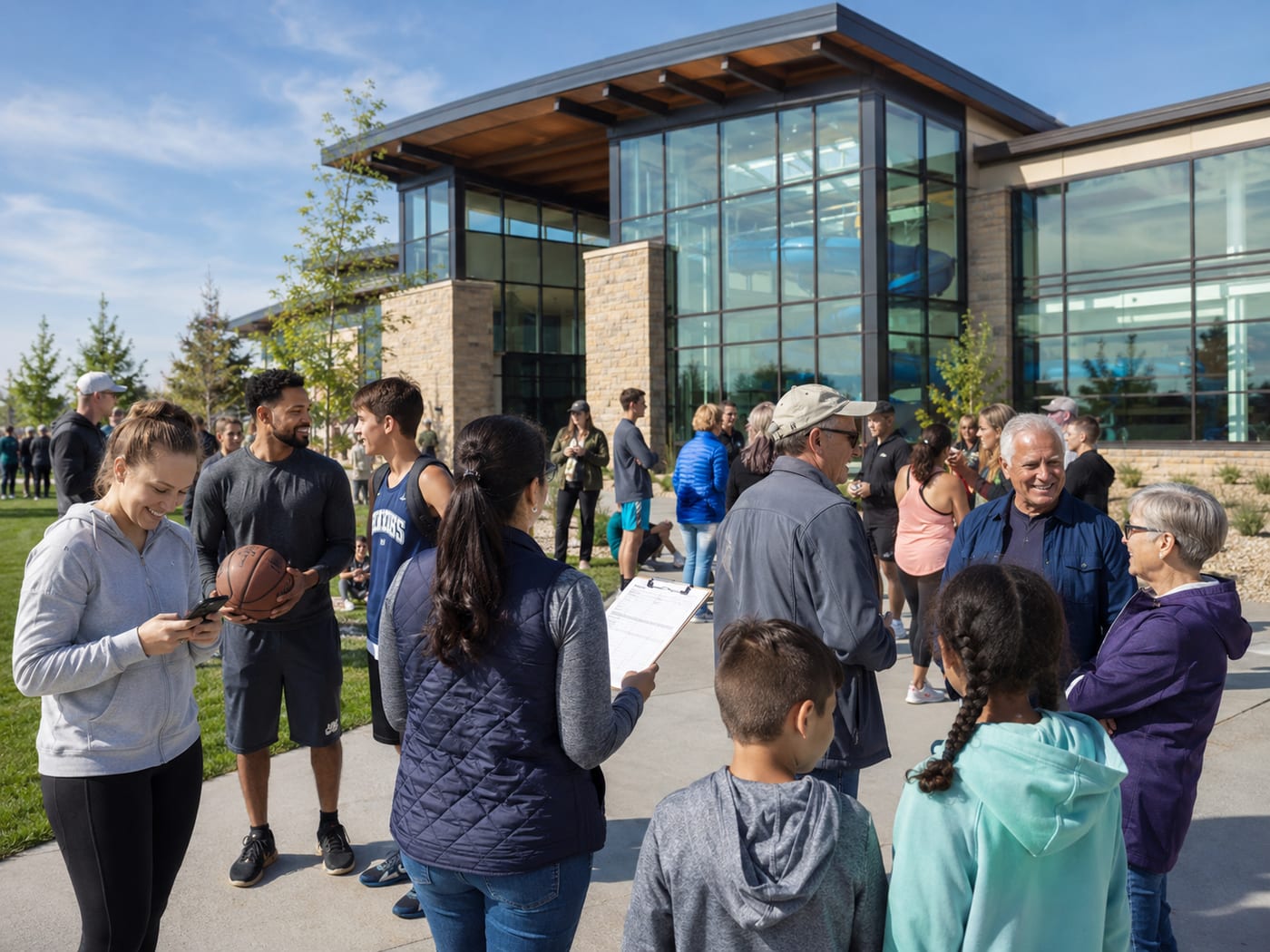
No specific site, cost, or funding mechanism has been finalized. The decisions being made now, about design priorities, programming, and community needs, are still in formation. For Twin Falls seniors and the families who care about them, the window to shape what gets built is open.
Closing
Twin Falls is not a city without resources or ambition. It stewards more than 1,650 acres of parks, manages a pool that processes 60,000 visits a year, and serves as the commercial and medical hub for the entire Magic Valley. What it does not yet have is a place where an aging population can access the kind of structured, evidence-based, socially connected wellness programming that federal agencies, peer-reviewed research, and comparable Idaho cities have demonstrated works.
The question is not whether that programming matters. The evidence on that point is settled. The question is how long Twin Falls will remain one of the only cities its size in Idaho without the facility to deliver it.
Frequently Asked Questions
What kinds of senior wellness programs would a recreation center offer? Evidence-based programs like EnhanceFitness (group exercise with certified instructors, recognized by the CDC), aquatic exercise, balance and fall-prevention classes, strength training, and social wellness programming like the WISE program from the National Council on Aging. These programs have documented track records of improving health outcomes for older adults across the country.
Would senior memberships be affordable for residents on fixed incomes? Comparable Idaho facilities offer reduced senior rates. Idaho Falls charges a $4 senior daily rate at its recreation center. Pocatello's Community Recreation Center accepts SilverSneakers, Silver & Fit, and Renew Active, which are fitness benefits included in many Medicare Advantage plans at no additional cost to the member. Affordability is a standard design consideration for public recreation centers.
How does a recreation center actually reduce falls? Structured exercise programs improve balance, strength, and coordination, which are the primary physical factors behind fall prevention. The federal government's Healthy People 2030 framework identifies physical activity as a key strategy for preventing fall-related injuries. Programs like EnhanceFitness, which the U.S. Administration for Community Living has approved as a fall prevention program, are specifically designed to address these risk factors in group settings with trained instructors.
How does Twin Falls compare to peer Idaho cities for senior recreation? Twin Falls, at roughly 57,000 residents, has no public recreation center. Pocatello (roughly 57,000) operates a Community Recreation Center and the Portneuf Wellness Complex. Idaho Falls (roughly 65,000) has a Recreation Center and the Wes Deist Aquatic Center. Nampa (roughly 110,000) has a 140,000-square-foot facility with a dedicated senior center wing. Jerome (roughly 13,000) has a 32,000-square-foot recreation center with pool, courts, and group fitness.
Is Twin Falls actively considering a recreation center? A city committee has been studying the question since 2017. In June 2025, the City Council voted to advance the feasibility process. No specific site, cost, or funding mechanism has been finalized as of this writing.
Where can residents follow the conversation? Twin Falls City Council meetings are open to the public, and the Parks and Recreation Department posts updates on the city's official website. A community advocacy group is also tracking the issue at twinfallsreccenter.com.