Rec Center
Badminton Is Not What You Think. Your Rec Center Can Host It
TL;DR:
Most Americans think of badminton as a backyard game played at family cookouts. In reality, it is an Olympic sport, one of the most played sports on the planet, and one of the easiest activities a community recreation center can offer. It requires minimal equipment, fits on a gymnasium floor, works for every age and skill level, and can be set up alongside the sports Twin Falls residents already play. The proposed rec center would give the Magic Valley a place to discover a sport that 220 million people play worldwide and that most Twin Falls families have never tried indoors.
If you have played badminton, there is a good chance it happened in a backyard. Maybe at a family barbecue. Maybe with a cheap racket from a department store and a shuttlecock that kept blowing sideways in the wind. And there is a good chance you walked away thinking it was a casual game for kids and cookouts.
That version of badminton is real. It is also not the actual sport.
The sport behind the backyard game
Badminton has been an Olympic sport since 1992. It is played competitively in more than 180 countries. The Badminton World Federation estimates that more than 220 million people play the sport regularly worldwide, making it one of the most participated-in sports on earth, second only to soccer by most measures.
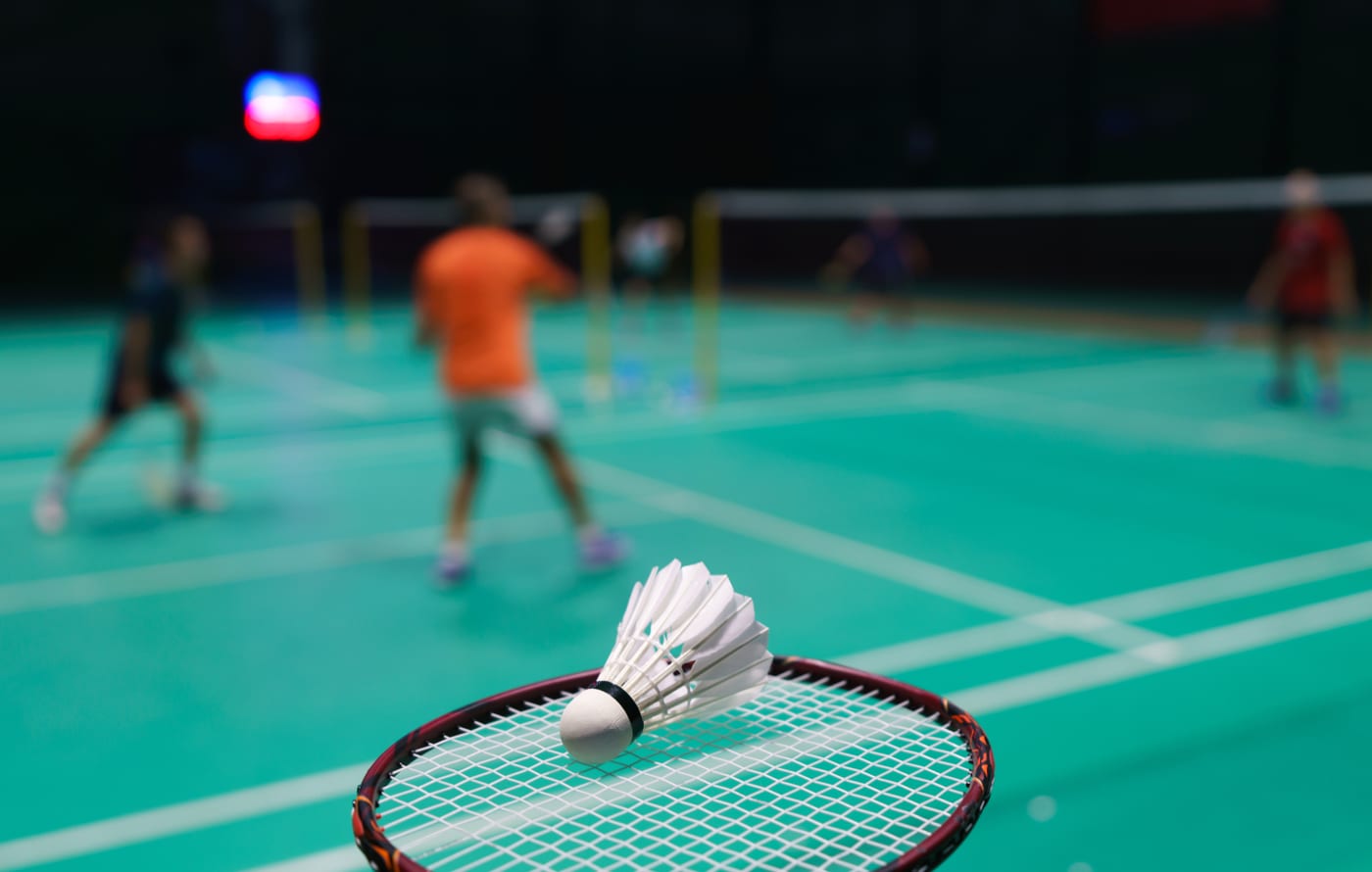
The competitive version looks nothing like the backyard version. It is played indoors on a court roughly half the size of a tennis court. The shuttlecock travels at speeds exceeding 200 miles per hour in professional play. Matches require explosive footwork, rapid reflexes, and the kind of cardiovascular endurance that surprises first-time players. A competitive badminton rally involves more directional changes per minute than almost any other racquet sport.
In the United States, the sport has a smaller but genuine footprint. The Sports and Fitness Industry Association reported that approximately 3.5 million Americans played badminton in 2022. USA Badminton, the national governing body and a member of the U.S. Olympic Committee, sanctions tournaments across the country and oversees junior development programs, adult competition, and the U.S. national team.
The sport has not reached the mainstream popularity in America that it enjoys in Asia and Europe. But that gap is partly a function of facility access. Badminton is an indoor sport. Without gymnasiums that offer court time, nets, and programming, most Americans never encounter the competitive version. They only know the backyard one.
A community recreation center changes that.
Why badminton works at a rec center
From a facility standpoint, badminton is one of the simplest sports a recreation center can offer. The requirements are minimal, and nearly everything needed already exists in the proposed Twin Falls rec center's facility plan.
A standard badminton court measures 20 by 44 feet for doubles play. That is almost identical to a pickleball court and fits comfortably within the lines of a basketball court. A regulation gymnasium with four basketball courts can accommodate multiple badminton courts simultaneously. Portable nets are lightweight, inexpensive, and set up in minutes. Rackets and shuttlecocks cost a fraction of what most sports equipment runs.
The sport does not require permanent court markings, specialized flooring, or dedicated infrastructure. It shares gymnasium space with basketball, volleyball, futsal, and pickleball the same way all of those sports share space with each other. Nets go up for badminton night, come down afterward, and the floor is ready for the next activity.
That low overhead is why recreation centers across the country include badminton as part of their standard programming without needing to build anything extra. It slots into the existing facility schedule as one more activity the gymnasium supports.
What community badminton programming looks like
Badminton at a recreation center is not a professional tournament circuit. It is community-level programming designed to give residents a way to try, learn, and enjoy a sport that most of them have never played indoors. Here is what it typically looks like in practice.
Open play nights. The most common format. The rec center sets up badminton nets on designated evenings, and residents drop in to play. No registration required. No skill level expected. Players rotate partners, play casual games, and get a workout that is more demanding than most newcomers expect. Open play nights are how most American adults discover competitive badminton for the first time.
Casual community tournaments. Once a base of regular players exists, a recreation center can host small round-robin tournaments on a Saturday. These are friendly, low-pressure events with 8 to 16 players or pairs, organized by skill level or age group. They do not require sanctioning, professional judges, or elaborate production. A volunteer coordinator, a bracket board, and a few hours of court time are enough to run an enjoyable community event.
Youth introduction clinics. Short sessions, typically four to six weeks, that teach kids the basics of the sport: grip, footwork, serving, and rally play. Badminton is one of the easier racquet sports for children to pick up because the shuttlecock moves slower than a tennis ball at the recreational level, and the court is small enough that young players can cover it without exhaustion.
Family and intergenerational play. Badminton is one of the few sports where a parent and a child, or a grandparent and a teenager, can play together meaningfully. The pace adjusts naturally to the skill level of the players. A casual doubles game between a 14-year-old and a 65-year-old is not only possible but genuinely fun for both, which makes badminton a natural fit for a facility that serves seniors, youth, and families under the same roof.
Senior-friendly fitness. Badminton provides a cardiovascular and agility workout with significantly lower joint impact than running, basketball, or tennis. The court is small enough that players do not need to cover long distances, and the shuttlecock's lighter weight reduces strain on shoulders and arms. For older adults looking for an active alternative to walking or stationary equipment, badminton offers something most gym workouts cannot: competition, social interaction, and fun.
A sport that fills gaps in the schedule
One of the practical advantages of badminton programming is that it does not need prime-time gymnasium hours to work. Open play nights and casual leagues can run on weekday evenings when the gym is not scheduled for basketball or volleyball leagues. Youth clinics can run on weekend mornings or after school. Senior play can fill mid-morning weekday slots when the facility is typically quietest.
This is the same scheduling logic that applies to every activity the rec center hosts. The facility utilization argument that makes a recreation center financially sustainable depends on programming breadth: the more activities the gymnasium supports across different hours and different days, the more revenue the facility generates and the more residents it serves.
Badminton adds another activity to that mix at almost zero additional cost. The gymnasium already exists. The floor already works. The only investment is portable nets, a supply of rackets and shuttlecocks for loaner use, and a staff member or volunteer to coordinate programming. That is one of the lowest barriers to entry of any sport the facility could offer.
What Twin Falls would be starting
Twin Falls does not currently have an established competitive badminton community. There is no local club, no existing league, and no regular organized play. This blog is not going to pretend otherwise.
But that is precisely the point. A recreation center is where sports communities start. Pickleball did not have 19.8 million American players a decade ago. It grew because facilities offered court time and programming, and people showed up and discovered they loved it. Futsal is still unfamiliar to many American families, but recreation centers that offer it find consistent demand once players try it.
Badminton has the same potential on a smaller scale. An open play night at a Twin Falls recreation center would not draw hundreds of players on day one. It might draw fifteen or twenty curious residents who saw it on the schedule, tried it indoors for the first time, and came back the following week. That is how community sports programming builds. One session at a time, one player at a time, in a facility that exists to give people the chance to try.
The proposed Twin Falls rec center is designed to host basketball, volleyball, wrestling, pickleball, futsal, cheer and dance, and fitness programming. Badminton fits into that facility without requiring a single additional square foot of construction. It just needs a net, a shuttlecock, and a Tuesday evening.
Where the conversation stands
A recreation center committee within the Twin Falls Parks and Recreation Department has been studying this question since 2017. In June 2025, the City Council voted to advance the long-stalled feasibility study. Parks and Recreation Director Wendy Davis said the council's vote "breathed a little bit of life into what I thought was a dying initiative."
A grassroots advocacy campaign has proposed naming a potential facility after U.S. Army Specialist Troy Carlin Linden, a soldier with the 54th Engineer Battalion who was killed in action on July 8, 2006, in Ar Ramadi, Iraq. The proposal comes from a Twin Falls resident who served in the same unit.
Closing
Badminton is the second most played sport on the planet. It is an Olympic discipline requiring speed, reflexes, and endurance that would surprise anyone who has only played it in a backyard. And it is one of the simplest, cheapest, and most accessible activities a community recreation center can add to its programming.
Twin Falls does not need a dedicated badminton facility. It does not need a professional tournament circuit. It needs a gymnasium with a net, some court time, and a community willing to try something most of them have never played indoors. The proposed recreation center provides exactly that, alongside every other sport it is designed to host.
Sometimes the best thing a rec center does is introduce a community to something it did not know it was missing.
Frequently Asked Questions
Is badminton a real competitive sport? Yes. Badminton has been an Olympic sport since 1992 and is played competitively in more than 180 countries. The Badminton World Federation estimates over 220 million active players worldwide. Professional shuttlecock speeds exceed 200 mph. The sport requires explosive agility, cardiovascular endurance, and rapid decision-making.
What does community badminton at a rec center look like? Typical programming includes open play evenings where residents drop in for casual games, youth introduction clinics teaching basic skills, small round-robin community tournaments, and senior-friendly sessions. No prior experience or special equipment is required. The rec center provides nets and loaner rackets.
Does Twin Falls have a badminton community? Not currently in an organized form. There is no local club or regular league. A recreation center would be the starting point for building one, the same way facilities across the country have introduced communities to pickleball, futsal, and other sports through open play programming.
Can badminton courts fit in a gymnasium alongside other sports? Yes. A badminton doubles court (20 by 44 feet) fits within basketball court dimensions. Portable nets set up in minutes and come down afterward. Badminton shares gymnasium time with basketball, volleyball, pickleball, and other sports without requiring permanent infrastructure.
Is badminton good exercise? Yes. A competitive badminton match burns roughly the same calories as running or cycling at a moderate pace, with significantly less joint impact. The sport provides cardiovascular conditioning, agility training, and hand-eye coordination in a format that is social and competitive rather than solitary.
Is Twin Falls actively considering a recreation center? A city committee has been studying the question since 2017. In June 2025, the City Council voted to advance the feasibility process. No specific site, cost, or funding mechanism has been finalized as of this writing.
Where can residents follow the conversation? Twin Falls City Council meetings are open to the public, and the Parks and Recreation Department posts updates on the city's official website. A community advocacy group is also tracking the issue at twinfallsreccenter.com.