Rec Center
19.8 Million Play Pickleball. Twin Falls Can't Host a Game.
TL;DR:
Pickleball has been the fastest-growing sport in America for four consecutive years, with participation surging 311 percent in three years to reach 19.8 million players. Unlike basketball or volleyball, pickleball draws players across all age groups, from teenagers to 75-year-olds, competing in age-bracketed divisions at the same tournament on the same weekend. Mid-sized pickleball tournaments generate $800,000 to $3.6 million in documented economic impact for host cities. The proposed Twin Falls recreation center explicitly includes dedicated pickleball courts. Twin Falls currently has no indoor facility capable of hosting a sanctioned pickleball tournament, and every event that could happen here happens somewhere else instead.
The conversation about tournament hosting and the Twin Falls recreation center has so far focused on basketball and volleyball, two sports with strong youth participation and documented economic impact. But there is a third sport that belongs in the conversation, and it brings something to the table that neither basketball nor volleyball can offer.
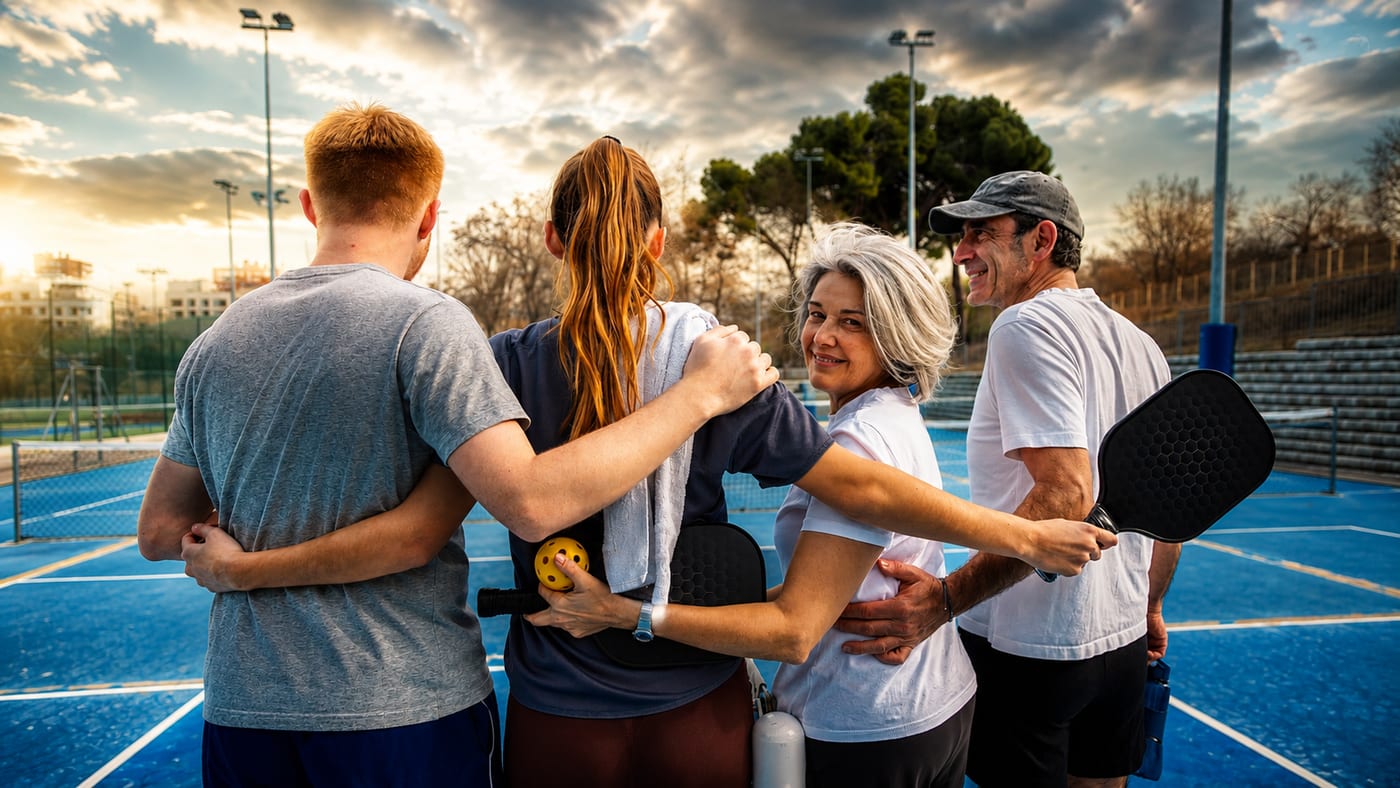
Pickleball is the only major tournament sport where a 25-year-old and a 70-year-old compete in the same facility, on the same weekend, in the same event. That is not a marketing claim. It is the structural reality of how pickleball tournaments work, and it changes what "tournament hosting" means for a community like Twin Falls.
A growth story unlike any other sport
The numbers behind pickleball's rise are difficult to overstate, and they have been verified repeatedly by independent sources.
According to the Sports and Fitness Industry Association's 2025 Topline Participation Report, 19.8 million Americans played pickleball in 2024. That represents a 45.8 percent increase from 2023 and a 311 percent increase over three years. Pickleball has been the fastest-growing sport in America for four consecutive years, outpacing every other sport tracked by the SFIA.
The growth is happening across every demographic and every region. The SFIA and Pickleheads' 2024 State of Pickleball Report found that the 25-to-34 age group now has the most pickleball players at 2.3 million. The average player age is 34.8 years old and dropping. One million children started playing the sport in a single year. Every region of the United States saw increased participation for the fifth consecutive year.
The infrastructure is expanding to match. The USA Pickleball Annual Growth Report documents 82,613 pickleball courts now in existence across the country, with 14,155 new courts added in 2024 alone. USA Pickleball's membership grew to 104,828 in 2025. The organization sanctioned 142 tournaments in 2024 and awarded $45,350 in community and youth grants.
This is not a fad winding down. The SFIA's mid-year 2025 check-in projects approximately 22.7 million players by the end of 2025. The growth rate is moderating from its explosive pandemic-era surge, but pickleball remains the fastest-growing sport in the country by a significant margin.
What pickleball tournaments generate for host cities
Pickleball tournament economics follow the same fundamental pattern as basketball and volleyball: visiting players and families book hotel rooms, eat at restaurants, buy gas, and spend money in the host city's economy. The documented impact at every scale confirms that pickleball tourism is real and measurable.
At the national level, the Minto US Open Pickleball Championships in Naples, Florida drew 3,100 participants and 41,000 spectators in 2023, generating an estimated $14 million in economic impact and filling 9,500 hotel room nights. The event generated nearly $170,000 in tourist taxes alone. The 2024 USA Pickleball National Championships in Mesa, Arizona generated $3.6 million in economic impact over nine days.
At the mid-sized level, which is the scale most relevant to Twin Falls, the numbers are still significant. The Greensboro Golden Ticket Tournament projected more than 3,375 hotel room nights and over $2 million in direct economic impact. A professional tournament coming to the Quad Cities projected $1.2 million in economic impact. The Southern Pickleball Championships in Macon, Georgia generated $809,640 in economic impact and 1,332 hotel room nights.
In Opelika, Alabama, a city that built 24 dedicated pickleball courts at its sportsplex, a series of five tournaments generated a combined $2 million in economic impact. Individual events ranged from $100,000 (200 players) to $625,000 (750 players). The city's sports tourism director noted that overnight visitors "double or triple their spending" compared to day-trippers, which is why tournament-capable facilities with nearby hotel infrastructure matter.
These are not major metro areas. They are mid-sized communities that made a deliberate infrastructure investment and are now seeing documented returns. Twin Falls, with hotel infrastructure along Blue Lakes Boulevard, interstate access, and a metro area of more than 122,000 people, has the geographic profile to compete for exactly these events.
The sport that serves every generation at once
This is where pickleball diverges most sharply from basketball and volleyball, and where it connects most directly to what the Twin Falls recreation center is designed to do.
Basketball tournaments serve primarily youth and young adult athletes. Volleyball tournaments serve primarily teenage girls and young women. Both are valuable. But neither sport routinely brings a 16-year-old and a 70-year-old into the same facility for the same event.
Pickleball does. Tournament divisions are structured by age bracket: 19+, 35+, 50+, 65+, and 75+ are standard competitive categories. A single weekend pickleball tournament can have a college student competing in the morning, a 45-year-old in the afternoon, and a retired couple in the evening, all on the same courts, all part of the same event, all contributing to the same economic impact.
That multi-generational structure means a pickleball tournament activates the full community in a way that single-demographic events cannot. The senior wellness programming that the rec center conversation has documented as a need for Twin Falls' 8,967 residents over 65 is not separate from the pickleball conversation. It is the same conversation. Seniors are among pickleball's most consistent and passionate players, and tournament participation gives them competitive, social, and physical engagement that no other widely available sport provides at their age.
The 2025 USA Pickleball National Championships featured wheelchair and hybrid pickleball as competitive divisions for the first time, with expanded wheelchair and adaptive standing rules incorporated into the 2026 rulebook. The disability access argument for a Twin Falls rec center intersects directly with pickleball's inclusive tournament structure.
Why pickleball needs dedicated courts
One practical distinction separates pickleball from basketball and volleyball in the facility conversation. Basketball and volleyball share the same multi-court gymnasium space. A facility with four regulation basketball courts can convert those courts to volleyball configuration on alternate weekends. Pickleball cannot share that space in the same way.
Pickleball courts are smaller than tennis or basketball courts (20 by 44 feet) with a 34-inch net. A standard gymnasium can fit multiple pickleball courts, but tournament play requires dedicated, permanently lined courts with proper spacing, portable nets, and sometimes temporary grandstand seating. Many facilities handle this by designating a section of court space for permanent pickleball use while keeping the remainder flexible for basketball and volleyball.
The proposed Twin Falls recreation center explicitly includes dedicated pickleball courts as part of its facility plan, separate from the four regulation basketball courts. This is significant because it means the facility would not have to choose between hosting a basketball tournament and offering pickleball on the same weekend. Both can happen simultaneously, which maximizes facility utilization and revenue.
The social dimension that matters for Twin Falls
Pickleball is consistently described by players and researchers as the most social sport in American recreation. The Quad Cities Business Journal quoted the president of a local pickleball club: "You just show up and get in a game. It's the most social sport I've ever been involved with."
That social dimension connects to a broader argument about what Twin Falls needs from its recreation infrastructure. The mental health case for a recreation center documented that Idaho has designated behavioral health as a state public health priority, and that the U.S. Surgeon General identified strengthening social infrastructure as the first pillar for addressing the loneliness epidemic. A sport that routinely brings strangers together, that encourages showing up alone and being welcomed into a game, and that creates social bonds across age groups is exactly the kind of programming a community recreation center is designed to support.
For Twin Falls seniors in particular, pickleball offers something that individual gym workouts cannot: competitive engagement, social accountability, and a reason to show up consistently. Those are the same factors that the evidence-based senior wellness research identifies as most effective for health outcomes.
Where the conversation stands
A recreation center committee within the Twin Falls Parks and Recreation Department has been studying this question since 2017. In June 2025, the City Council voted to advance the long-stalled feasibility study. Parks and Recreation Director Wendy Davis said the council's vote "breathed a little bit of life into what I thought was a dying initiative."
A grassroots advocacy campaign has proposed naming a potential facility after U.S. Army Specialist Troy Carlin Linden, a soldier with the 54th Engineer Battalion who was killed in action on July 8, 2006, in Ar Ramadi, Iraq. The proposal comes from a Twin Falls resident who served in the same unit.
Closing
Basketball fills gymnasiums with young athletes. Volleyball fills them with teenage girls and their families. Pickleball fills them with everyone.
That is not hyperbole. It is the documented reality of a sport that has grown 311 percent in three years, draws 19.8 million players across every age group and region, and generates measurable economic impact for every city that builds the infrastructure to host it. The proposed Twin Falls recreation center includes dedicated pickleball courts. The sport is already being played by Magic Valley residents. The tournament circuit is actively looking for new host cities.
The only missing piece is the facility. And for a community that has spent years discussing what a recreation center should serve and who it should include, pickleball may be the sport that most literally answers both questions at once.
Frequently Asked Questions
How big is pickleball in the United States? 19.8 million Americans played pickleball in 2024, according to the SFIA. The sport has grown 311 percent over three years and has been the fastest-growing sport in America for four consecutive years. The average player age is 34.8 years old and dropping. Over 82,000 courts now exist across the country.
How much do pickleball tournaments generate for host cities? Documented examples range from $100,000 for local events to $14 million for the US Open in Naples, Florida. Mid-sized tournaments, the scale most realistic for Twin Falls, routinely generate $800,000 to $3.6 million. The Greensboro Golden Ticket Tournament projected over 3,375 hotel room nights and $2 million in economic impact.
What makes pickleball different from basketball and volleyball for tournament hosting? Pickleball is the only major tournament sport that serves all age groups in the same event through age-bracketed divisions (19+, 35+, 50+, 65+, 75+). It also requires dedicated courts rather than shared gymnasium space, meaning pickleball and basketball tournaments can run simultaneously in the same facility.
Is pickleball just for older adults? No. While the sport initially gained popularity among retirees, the largest age group of players is now 25 to 34 years old. One million children started playing in a single year. The average player age has dropped to 34.8 and continues to trend younger. Pickleball is genuinely multi-generational.
Does the proposed Twin Falls recreation center include pickleball courts? Yes. The proposed facility explicitly includes dedicated pickleball courts alongside its four regulation basketball courts and volleyball courts. This means the facility could host pickleball programming and tournaments without conflicting with basketball or volleyball scheduling.
Is Twin Falls actively considering a recreation center? A city committee has been studying the question since 2017. In June 2025, the City Council voted to advance the feasibility process. No specific site, cost, or funding mechanism has been finalized as of this writing.
Where can residents follow the conversation? Twin Falls City Council meetings are open to the public, and the Parks and Recreation Department posts updates on the city's official website. A community advocacy group is also tracking the issue at twinfallsreccenter.com.