Rec Center
The Mental Health Case for a Recreation Center That Twin Falls Hasn't Heard Yet
TL;DR:
Idaho has identified behavioral health as one of the state's four public health priorities. The state ranks among the worst in the nation for teen suicide. NAMI reports that more than 109,000 Idaho adults needed mental health treatment but did not receive it. Meanwhile, the CDC and peer-reviewed research consistently show that physical activity reduces symptoms of depression and anxiety, and that community-based recreation facilities are among the few public spaces that deliver both structured physical activity and social connection at scale. Twin Falls, a city of 57,000 with no public recreation center, has no community-level infrastructure designed to address either factor.
The conversation about a Twin Falls recreation center has largely focused on physical health, youth sports, senior wellness, and economic impact. Those are real arguments supported by real evidence. But there is a dimension of the question that has received almost no attention locally, and it may be the most urgent one.
Idaho is in a documented mental health crisis. The data on that point is not ambiguous. And the research linking physical activity and social connection to mental health outcomes is among the most consistent in all of public health. A recreation center sits at the intersection of both.
Idaho's mental health landscape
The Idaho Department of Health and Welfare lists behavioral health as one of the state's four designated public health priorities, alongside diabetes, obesity, and unintentional injury. That designation is not a talking point. It is a policy determination based on state-level data showing that mental health outcomes in Idaho are measurably worse than in most of the country.
The numbers bear it out. According to NAMI's 2025 Idaho fact sheet, more than 109,000 Idaho adults reported needing mental health treatment but not receiving it. Cost was cited as a prevailing factor. In 2023, 14,576 calls were made to Idaho's 988 Suicide and Crisis Line.
For young people, the picture is sharper. Idaho Youth Ranch data shows that Idaho's youth suicide rate increased from 8 to 10.7 per 100,000 children ages 10 to 17 between 2016 and 2021. America's Health Rankings placed Idaho 46th in the nation for teen suicide completions among 15- to 19-year-olds. In Boise School District wellness surveys, 44 percent of high school students reported moderate to severe depressive symptoms in the two weeks before being surveyed.
Nationally, the CDC's 2023 Youth Risk Behavior Survey found that 40 percent of U.S. high school students reported persistent feelings of sadness or hopelessness, up from 30 percent in 2013. Among female students, the figure was 53 percent. Among LGBQ+ students, 65 percent. The Annie E. Casey Foundation reports that nearly 1 in 5 youth ages 12 to 17 had at least one major depressive episode in the past year, roughly 4.5 million adolescents.
These are not numbers that a recreation center alone can fix. But they are numbers that point to a need for community-level infrastructure that does more than treat illness after it arrives. They point to the need for prevention.
What physical activity actually does for mental health
The connection between physical activity and mental health is one of the most extensively documented relationships in public health research. The CDC states directly that regular physical activity "can reduce your risk of depression and anxiety and help you sleep better," and that "some brain benefits of physical activity happen immediately."
A separate CDC resource on brain health notes that physical activity "can help you think, learn, problem-solve, and enjoy an emotional balance. It can improve memory and reduce anxiety or depression." The agency also documents that regular physical activity reduces the risk of cognitive decline and dementia.
The peer-reviewed evidence reinforces this. A 2021 review published in Trends in Psychiatry and Psychotherapy, analyzing 11 prospective studies with more than 69,000 participants, found that higher levels of physical activity reduced incident anxiety by 26 percent after adjusting for confounding factors. The authors concluded that "exercise interventions should be incorporated to the routine care of people with mental disorders due to its multiple benefits on physical and mental health outcomes."
A 2023 comprehensive review published in Cureus found that regular physical activity improves the functioning of the body's stress-response system (the hypothalamus-pituitary-adrenal axis), reduces symptoms of depression and anxiety, improves sleep quality, and has been shown to help with substance abuse recovery.
None of this research suggests that exercise replaces clinical treatment for serious mental illness. What it consistently shows is that physical activity is a measurable, evidence-based factor in both prevention and management of common mental health conditions. The question for any community is whether residents have accessible, affordable places to be physically active.
Why social connection matters as much as movement
Physical activity is half of the equation. The other half is social connection, and the research on that dimension is equally clear.
The U.S. Surgeon General's 2023 advisory on loneliness and isolation documented that social isolation raises the risk of premature mortality by 29 percent, heart disease by 29 percent, and stroke by 32 percent. Among older adults, chronic loneliness increases the risk of developing dementia by approximately 50 percent. The advisory's first pillar for addressing the crisis is strengthening social infrastructure, specifically naming recreation facilities among the physical spaces that support connection.
The CDC's 2024 data on community and connection found that 1 in 8 U.S. adults reported difficulty participating in social activities due to a physical, mental, or emotional condition.
A 2013 evaluation of community centre programs published in the International Journal of Environmental Research and Public Health found that participation in community-based leisure, exercise, and social activities produced "positive changes in self-reported general health, mental health, personal and social well-being." The strongest outcomes occurred when group physical activities were combined with personal support and social accountability.
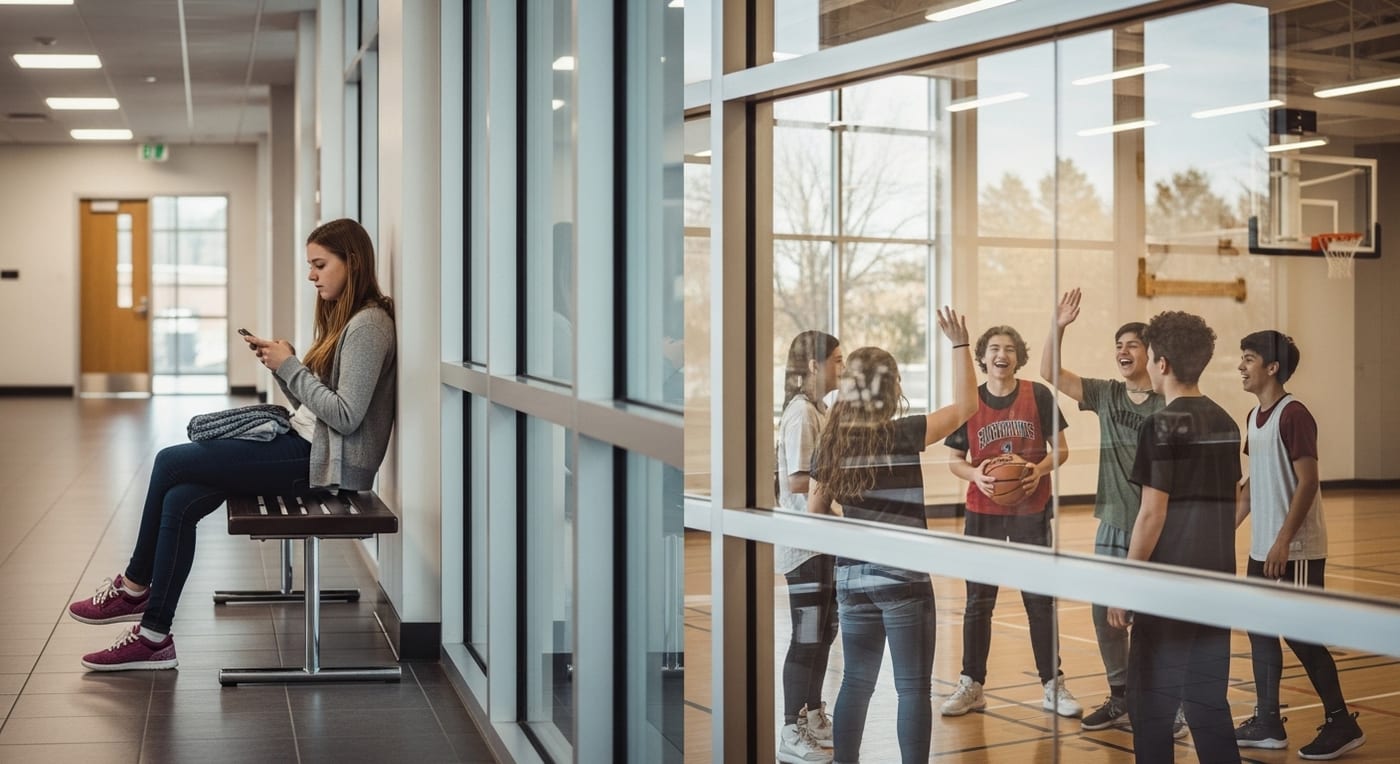
This is the distinction that matters for the recreation center conversation. A private gym provides equipment for individual exercise. A community recreation center provides structured group programming, consistent social contact, and a physical space where people are expected, where absence is noticed, and where the slow drift into isolation can be interrupted.
What Twin Falls currently has for mental health infrastructure
Twin Falls has clinical mental health providers. It has a hospital. It has the Senior Center on Shoshone Street. What it does not have is community-level prevention infrastructure designed to deliver the two things the research most consistently links to better mental health outcomes: accessible physical activity and structured social connection.
There is no public facility in Twin Falls where a teenager struggling with anxiety can join a group fitness class after school. There is no indoor space where a retired veteran dealing with isolation can show up for a walking group three mornings a week. There is no community hub where a parent experiencing postpartum depression can bring a toddler to a supervised play session while attending a yoga class in the next room.
Private gyms serve individual fitness. They are not designed for, and do not typically offer, the kind of group-based, socially structured, low-barrier programming that the mental health research points to as most effective.
Peer Idaho cities have addressed this. Pocatello and Idaho Falls both operate public recreation centers with group programming, aquatics, and community space. Nampa has operated a 140,000-square-foot facility for more than thirty years. Twin Falls, at 57,325 residents, has no comparable infrastructure.
What a recreation center does that clinical services cannot
Clinical mental health treatment is essential. Nobody should read this post as an argument that recreation replaces therapy, medication, or crisis intervention. What the evidence suggests is that community recreation infrastructure fills a gap that clinical services are not designed to fill.
Clinical treatment addresses diagnosed conditions. Recreation infrastructure addresses the upstream factors that research links to whether those conditions develop in the first place: physical inactivity, social isolation, lack of routine, and the absence of accessible, low-cost spaces for structured group activity.
The NRPA's 2025 research on healthy aging found that 95 percent of park and recreation agencies consider improving social connection and reducing social isolation the top benefit of their programming. Recreation centers are, by design, the kind of social infrastructure the Surgeon General's advisory calls for.
In a state where behavioral health is a designated public health priority and more than 109,000 adults report unmet mental health needs, the prevention side of the equation deserves as much attention as the treatment side. A recreation center is not therapy. It is the infrastructure that helps keep more people out of the therapist's office in the first place.
Where the conversation stands
A recreation center committee within the Twin Falls Parks and Recreation Department has been studying this question since 2017. In June 2025, the City Council voted to advance the long-stalled feasibility study. Parks and Recreation Director Wendy Davis said the council's vote "breathed a little bit of life into what I thought was a dying initiative."
A grassroots advocacy campaign has proposed naming a potential facility after U.S. Army Specialist Troy Carlin Linden, a soldier with the 54th Engineer Battalion who was killed in action on July 8, 2006, in Ar Ramadi, Iraq. The proposal comes from a Twin Falls resident who served in the same unit.
Closing
The physical health case for a recreation center has been made. The economic case has been made. The youth sports case, the senior wellness case, and the seasonal infrastructure case have all been made.
The mental health case has not, and in a state where behavioral health is a designated crisis, that is a significant gap in the conversation. The CDC, the Surgeon General, and decades of peer-reviewed research all point to the same conclusion: physical activity and social connection are measurable, evidence-based factors in mental health. A community recreation center is one of the few public investments that delivers both.
Whether Twin Falls builds one is a decision for the council and the residents who weigh in. What the mental health evidence makes clear is that the question is not just about courts and pools and walking tracks. It is about whether a city of 57,000 people, in a state with some of the worst mental health outcomes in the country, has the community-level infrastructure to address what its own state government has identified as a public health priority.
Frequently Asked Questions
Does physical activity really help with depression and anxiety? Yes. The CDC states that regular physical activity reduces the risk of depression and anxiety, with some brain benefits occurring immediately after a single session. A meta-analysis of 11 prospective studies with more than 69,000 participants found that higher levels of physical activity reduced incident anxiety by 26 percent. The evidence is consistent across multiple decades of research.
How bad is Idaho's mental health situation? Idaho's Department of Health and Welfare has designated behavioral health as one of the state's four public health priorities. NAMI reports that more than 109,000 Idaho adults needed mental health treatment but did not receive it. Idaho ranks 46th in the nation for teen suicide completions. Youth suicide rates in Idaho increased from 8 to 10.7 per 100,000 children ages 10 to 17 between 2016 and 2021.
Can a recreation center really address mental health? A recreation center is not a substitute for clinical treatment. What it provides is prevention infrastructure: accessible physical activity, structured group programming, and consistent social connection. These are the three factors that research most consistently links to better mental health outcomes at the community level. Clinical services treat conditions after they develop. Recreation infrastructure helps reduce the likelihood of their developing.
What does social connection have to do with mental health? The U.S. Surgeon General's 2023 advisory found that social isolation raises the risk of premature mortality by 29 percent and the risk of dementia in older adults by approximately 50 percent. The advisory's primary recommendation is strengthening social infrastructure, including recreation facilities, as the physical spaces where connection happens.
What do peer Idaho cities have that Twin Falls doesn't? Pocatello (roughly 57,000 residents), Idaho Falls (roughly 65,000), and Nampa (roughly 110,000) all operate public recreation centers with group programming, aquatics, and community space. Twin Falls, at 57,325 residents, has no comparable public facility.
Is Twin Falls actively considering a recreation center? A city committee has been studying the question since 2017. In June 2025, the City Council voted to advance the feasibility process. No specific site, cost, or funding mechanism has been finalized as of this writing.
Where can residents follow the conversation? Twin Falls City Council meetings are open to the public, and the Parks and Recreation Department posts updates on the city's official website. A community advocacy group is also tracking the issue at twinfallsreccenter.com.